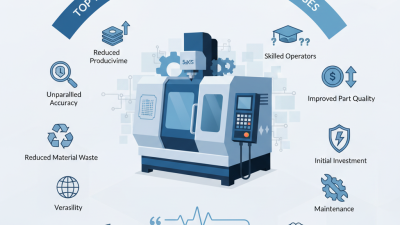
In the rapidly evolving landscape of modern manufacturing, 4-Axis Machines stand out as a pivotal innovation. Renowned expert Dr. Sarah Mitchell, a leading figure in CNC technology, emphasizes, “4-Axis Machines are reshaping how we approach complex machining tasks.” This statement reflects the growing recognition of these machines for their versatility and efficiency.
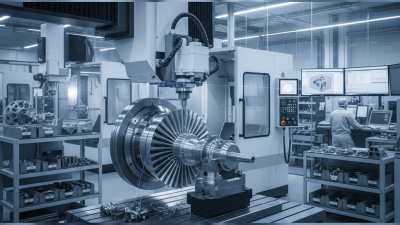
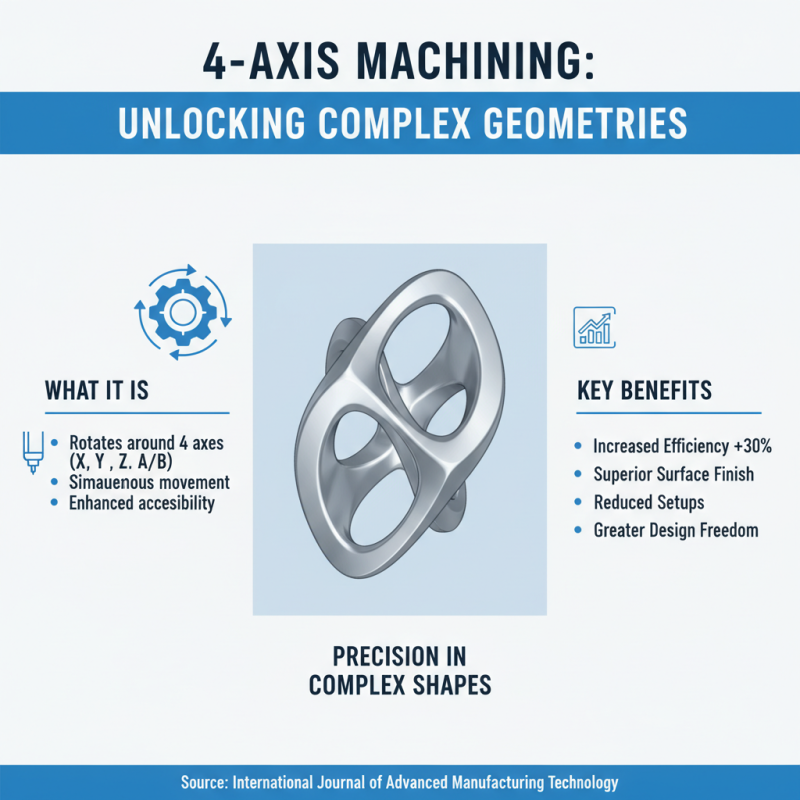
The advantages of 4-Axis Machines are numerous. They enable manufacturers to create intricate designs with remarkable precision. The capability to rotate around a fourth axis allows for more complex geometries that traditional three-axis machines simply cannot achieve. This opens up a new realm of possibilities for product design and development.
However, the integration of 4-Axis Machines is not without challenges. Training staff and adapting workflows can be difficult. Investment costs may also deter smaller manufacturers. Reflecting on these challenges, the potential benefits should not be overlooked. Ultimately, the strategic use of 4-Axis Machines can lead to significant productivity gains and higher-quality outputs in today's competitive market.
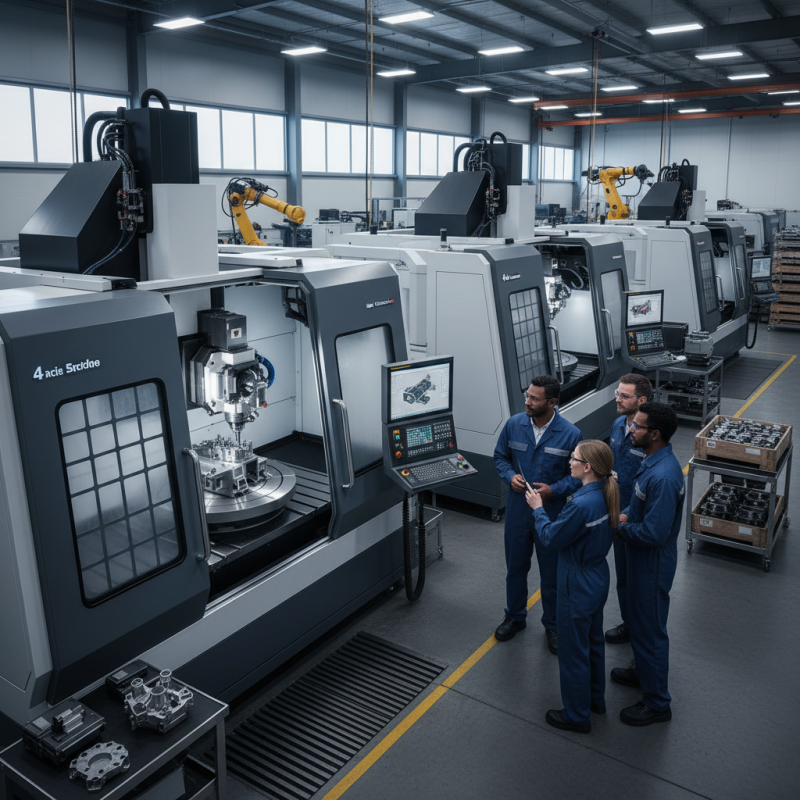
4 Axis machines are becoming essential in modern manufacturing. They bring significant advantages over traditional 3 Axis machines. One key benefit is increased efficiency. A study by Advanced Manufacturing Research indicates that 4 Axis machines can reduce setup times by up to 30%. This improvement allows for faster production processes, ultimately leading to cost savings.
Another advantage lies in versatility. 4 Axis machines enable operations on complex geometries without the need for multiple setups. This capability enhances precision and reduces error rates, especially in intricate designs. Research from the Manufacturing Technology Centre shows a 20% increase in accuracy when using 4 Axis machines compared to their 3 Axis counterparts.
Tip: Always evaluate your specific needs before deciding on machinery. Sometimes, a 3 Axis machine might suffice for simpler projects.
Despite their benefits, transitioning to 4 Axis machines can pose challenges. Initial costs are higher, which requires careful budgeting. Additionally, operators may need specialized training to maximize the machine's potential. Industry reports suggest that 60% of manufacturers experience a learning curve when adopting this technology.
Tip: Consider incremental upgrades. Gradually integrating 4 Axis technology may ease the transition for your team.
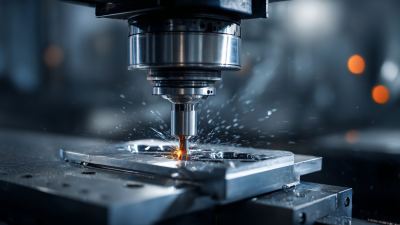
4-axis machining technology is transforming modern manufacturing, especially in handling complex geometries. Its ability to rotate around additional axes allows for intricate shapes to be created with precision. According to a report by the International Journal of Advanced Manufacturing Technology, manufacturers reported a 30% increase in production efficiency when switching to 4-axis machines compared to traditional 3-axis options.
Increased precision is particularly evident in industries requiring tight tolerances, such as aerospace and medical devices. A study conducted by the Society of Manufacturing Engineers highlighted that 4-axis machining can achieve dimensional accuracies of up to ±0.005 mm. This level of precision leads to higher quality parts and fewer reworks, ultimately saving time and resources in production.
Despite these advantages, not all manufacturers have adopted this technology fully. Some still struggle with the learning curve and the cost of integration. Practical implementation can be hindered by insufficient training or inadequate machine maintenance. These challenges necessitate reflection on the commitment to training programs and ongoing support for operators to ensure optimal use of 4-axis systems. Balancing the initial investments with long-term benefits remains key to unlocking the full potential of this technology.
In modern manufacturing, utilizing 4-axis machines can significantly enhance production efficiency. By engaging in simultaneous multi-axis machining, businesses can reduce cycle times by up to 40%. This dramatic improvement leads to faster turnaround rates for products. A report from a leading manufacturing association noted that companies adopting 4-axis technology witnessed a productivity boost of approximately 30% within the first year.
The ability to machine complex geometries in a single setup minimizes the need for manual repositioning. Less handling means fewer errors. Furthermore, the tight tolerances achievable with these machines improve overall product quality, reducing scrap rates. In fact, a survey revealed that firms reported a drop in material waste by nearly 20% after implementing 4-axis machining.
Tips: Regular maintenance of 4-axis machines is crucial to maintain efficiency. Ensure operators are well-trained to manipulate the technology fully. Explore CAD/CAM integration for optimal programming and setup. Neglecting these aspects could lead to suboptimal performance and can diminish the benefits of advanced machinery. Evaluate your processes regularly to identify any potential bottlenecks. Continuous improvement is key in modern manufacturing.
| Benefit | Description | Impact on Production |
|---|---|---|
| Increased Precision | 4 axis machines provide enhanced machining accuracy leading to higher quality products. | Reduces errors and waste, improving overall efficiency. |
| Complex Geometry Handling | Ability to machine complex shapes that would be difficult or impossible with standard 3 axis machines. | Expands the range of products that can be manufactured. |
| Reduced Cycle Times | Fewer setups needed thanks to multi-axis capabilities, leading to shorter production times. | Increases throughput and meeting delivery schedules. |
| Versatility | Can perform multiple machining processes, such as milling, drilling, and tapping. | Reduces the need for multiple machines and setups. |
| Higher Efficiency | Ability to operate continuously without significant downtime increases production efficiency. | Maximizes machine utilization. |
| Cost Savings | Reduction in labor costs and material waste due to improved precision. | Lower production costs overall. |
| Improved Safety | Automated machining reduces human error and improves safety in the workplace. | Creates a safer operational environment. |
| Minimal Setup Time | Quick and easy changeovers for different machining tasks. | Accelerates production line efficiency. |
| Increased Competitiveness | Ability to produce high-quality parts quickly keeps manufacturers competitive. | Enhances market position. |
| Enhanced Workflow | Integrated systems streamline the manufacturing process from design to production. | Increases overall business efficiency. |
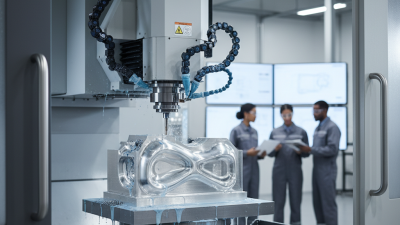
The versatility of 4-axis machines is a game-changer in modern manufacturing. These machines can handle a wide range of materials, including metals, plastics, and composites. This adaptability makes them ideal for various applications, from intricate prototypes to large-scale production runs. 4-axis technology allows manufacturers to create complex shapes with precision. This capability opens up new design possibilities that were difficult or impossible with traditional machines.
In addition to material versatility, 4-axis machines excel in accommodating diverse design requirements. They can implement various finishing techniques, such as milling, engraving, and drilling. This flexibility is crucial for industries that demand high customization. Companies can quickly switch from one job to another, saving time and resources. However, not all machines are equally effective. Careful selection and employee training are essential for maximizing benefits. Overlooking these aspects can lead to inefficiencies and increased production costs. Balancing complexity and user experience is a continual challenge for manufacturers investing in advanced technologies.
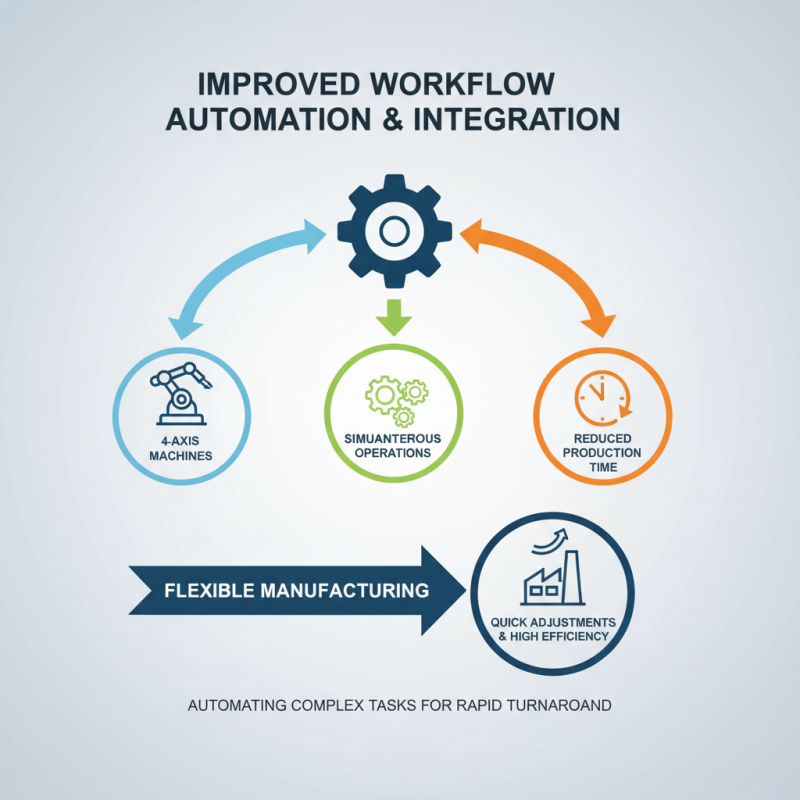
In modern manufacturing, 4-axis machines play a crucial role in improving workflow automation. These machines allow simultaneous operations, which increases efficiency. With their ability to handle complex tasks, manufacturers can reduce production time significantly. This rapid turnaround supports a flexible manufacturing environment, where quick adjustments can meet changing demands.
Integration with other systems enhances the workflow even further. For instance, advanced software can synchronize operations across different machines. This coordination minimizes downtime and streamlines processes. However, there can be challenges in adopting these technologies. Training staff adequately remains a concern. Additionally, unforeseen technical issues can disrupt integration efforts. Continuous evaluation is necessary to address these potential drawbacks.
Companies need to invest in staff training and technology updates continually. The commitment to improvement must be ongoing. As workflows evolve, staying flexible is essential for long-term success. By refining these systems, manufacturers can achieve a seamless integration that not only enhances efficiency but also propels innovation forward.