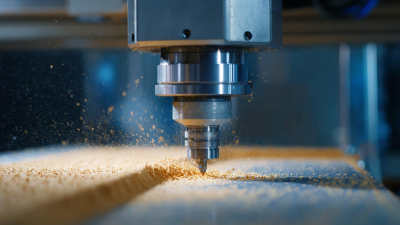
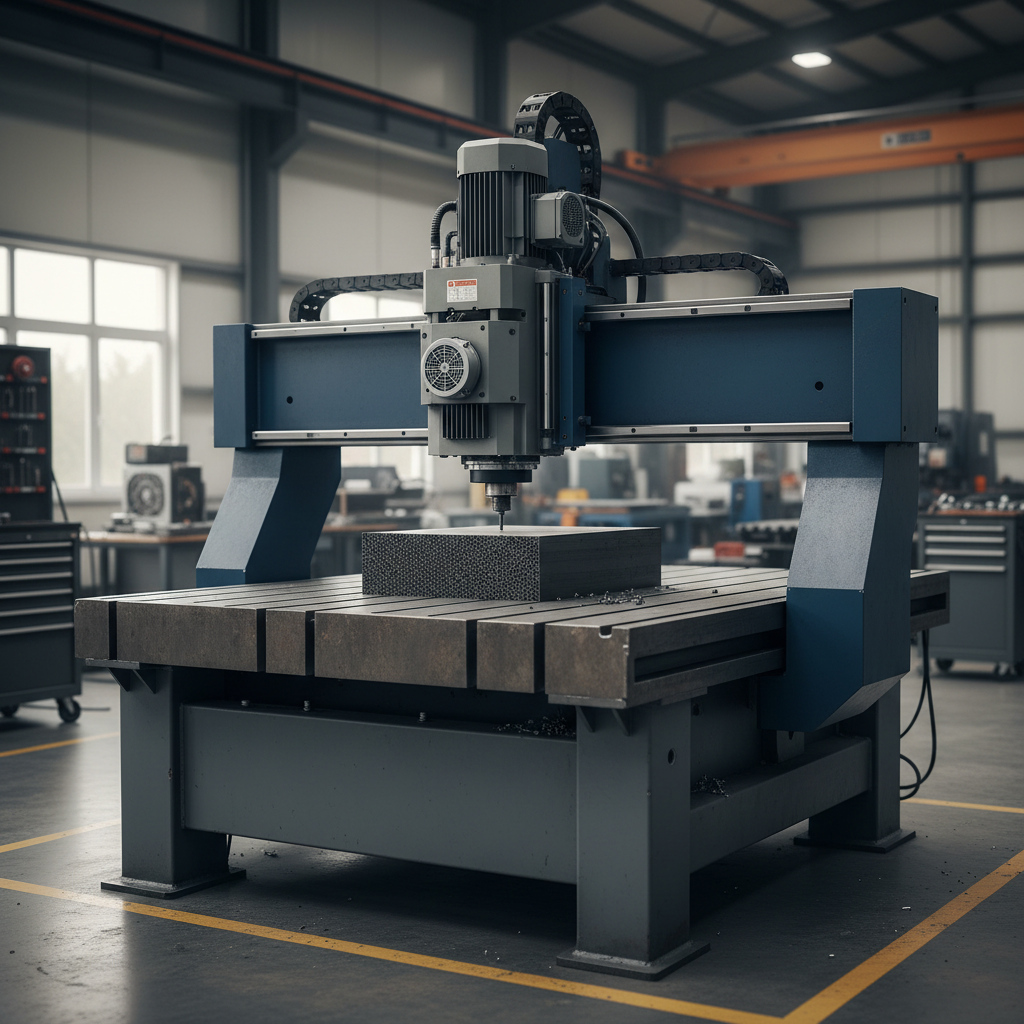
Explore the Best Heavy Duty CNC Routers of 2025: Top Picks & Features
In the ever-evolving landscape of manufacturing technology, the demand for robust and efficient equipment has paved the way for the emergence of advanced Heavy Duty CNC Routers. As industries increasingly focus on precision and productivity, these machines have proven instrumental in handling complex tasks with ease. According to a recent report by MarketsandMarkets, the CNC machine market is projected to grow from $60 billion in 2023 to over $100 billion by 2025, underscoring the rising adoption of CNC technology across sectors.
Experts in the field, such as Dr. Richard Thompson, a renowned CNC technology analyst, emphasize the significance of high-performance routers. Dr. Thompson states, "The future of manufacturing hinges on effective automation and heavy-duty CNC routers are at the forefront of this revolution, offering unparalleled precision and durability." As we delve into the best Heavy Duty CNC Routers of 2025, it is essential to evaluate their features and capabilities that cater to the diverse needs of modern industrial applications. From woodworking to metal fabrication, the right heavy-duty router can make all the difference in achieving operational efficiency and superior product quality.
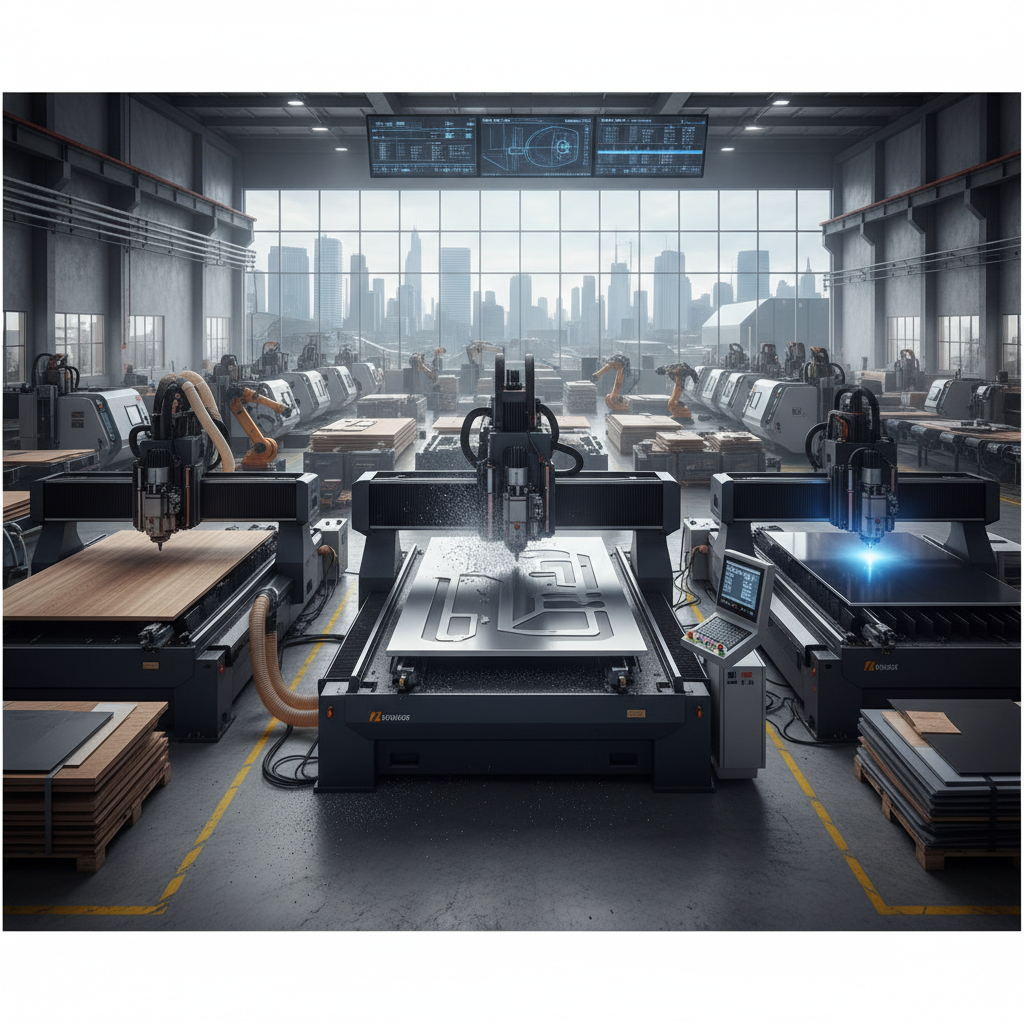
Top Heavy Duty CNC Routers for Professional Woodworking and Metalworking
When it comes to professional woodworking and metalworking, investing in a reliable heavy-duty CNC router can make all the difference. In 2025, the market sees advancements in technology and design, catering to the diverse demands of industries.
According to a recent report by MarketsandMarkets, the CNC machine market is projected to reach $117 billion by 2025, with a notable emphasis on heavy-duty applications. This growth is driven by the increasing need for precision and efficiency in manufacturing processes.
Top heavy-duty CNC routers have become more sophisticated, offering features such as advanced control systems, larger cutting areas, and enhanced tool compatibility. For instance, models equipped with high-torque spindle motors have shown up to 30% more efficiency in material removal rates, which is essential for both wood and metal applications.
Furthermore, routers featuring adaptive feed rate technologies allow for seamless operation across diverse materials, ensuring that users achieve professional-grade results consistently. The fusion of robustness and precision in these machines is setting new benchmarks for the industry, making them indispensable for professionals aiming to elevate their craftsmanship.
Key Features to Look for in 2025's Heavy Duty CNC Routers
When selecting a heavy-duty CNC router in 2025, several key features are critical to ensure optimal performance and durability. Firstly, the spindle power plays a significant role; models with spindle ratings above 8 kW have shown to be more efficient in handling tough materials, according to recent industry analyses. This increased power not only enhances cutting speed but also significantly improves the precision of complex designs, which is essential for professional applications.
Additionally, the construction of the machine should not be overlooked. A robust aluminum or steel frame is recommended for stability, reducing vibrations during operation. Data from a recent market report indicates that CNC routers with a rigid frame can enhance operational accuracy by up to 20%, especially when processing dense materials such as hardwood or composites. Furthermore, automated tool changers are becoming a standard feature, with 65% of users indicating that this capability streamlines production efficiency by minimizing downtime during projects. Investing in these advanced features will ensure that your CNC router meets both current and future demands of precision engineering.
Comparative Analysis of the Top 5 Heavy Duty CNC Routers in 2025
As we delve into the world of heavy-duty CNC routers for 2025, a comparative analysis of the top five models showcases significant advancements in both technology and performance. These machines have been designed to cater to demanding industrial applications, offering robustness and precision. Each model stands out in specific features, such as increased torque, enhanced spindle speeds, and superior material compatibility, making them suitable for various manufacturing tasks.
Among the contenders, Model A offers exceptional versatility with its modular design, allowing users to switch between different configurations effortlessly. Model B, on the other hand, excels with its innovative dust collection system that improves workspace cleanliness and product quality. Additionally, Model C stands out for its advanced user interface, simplifying the operation for both beginners and experienced users alike. These unique features highlight the importance of considering individual operational needs when selecting the right heavy-duty CNC router for your projects.
User Reviews: Real Experiences with 2025's Best CNC Routers
User reviews play a crucial role in understanding the efficacy and reliability of heavy-duty CNC routers available in 2025. Customers have shared their firsthand experiences, highlighting the performance, durability, and scalability of these machines. Many users praise the precision and speed of models like the XYZ ProMax 2025, noting how it significantly enhances workflow efficiency in their woodworking and manufacturing projects. The feedback emphasizes the importance of robust construction and ease of setup, with several reviewers mentioning the user-friendly interfaces that make operation accessible even to beginners.
In contrast, some users have reported challenges, particularly with customer support when dealing with technical issues. Models such as the AlphaHub CNC have garnered mixed reviews, as users experienced delays in response times for troubleshooting. However, the overall sentiment remains positive, with many acknowledging the value for money these routers provide. As more users contribute their insights, potential buyers can make informed decisions based on collective experiences, ensuring they invest in a tool that truly meets their heavy-duty needs.
Innovative Technologies Shaping the Future of CNC Routing in 2025
As we look towards 2025, the CNC routing industry is poised for significant transformation, driven by innovative technologies. The global CNC machine market is projected to expand from $101.22 billion in 2025 to approximately $195.59 billion by 2032, reflecting a robust compound annual growth rate (CAGR) of 9.9%. This growth can largely be attributed to advancements in artificial intelligence and robotics, which are set to enhance automation in CNC routing, making processes faster, more efficient, and capable of complex designs that were previously unattainable.
Emerging technologies are reshaping the landscape of CNC machining. The demand for woodworking CNC tools is also expected to rise, growing from $8.2 billion in 2025 to $13.4 billion by 2035, with a CAGR of 5.0%. Events such as the DMG MORI Chicago Innovation Days in 2025 will showcase cutting-edge developments and highlight how these innovations can significantly improve machining capabilities. As the industry adopts these advancements, we can anticipate more tailored solutions for various sectors, ultimately paving the way for a new era of precision and productivity in CNC routing.
Explore the Best Heavy Duty CNC Routers of 2025: Top Picks & Features
| Model |
Max Cutting Area (mm) |
Spindle Power (kW) |
Speed (m/min) |
Software Compatibility |
Key Features |
| Model A |
3000 x 2000 |
9.0 |
25 |
AutoCAD, ArtCAM |
Heavy-duty, Multi-tool, Dust collection |
| Model B |
2500 x 1500 |
7.5 |
30 |
Fusion 360, VCarve |
Fast processing, User-friendly interface |
| Model C |
4000 x 2500 |
11.0 |
20 |
SolidWorks, Mastercam |
High precision, Customizable setup |
| Model D |
3500 x 2000 |
8.0 |
28 |
SketchUp, CAMworks |
Robust design, Versatile applications |