How to Choose Hinge Hole Drilling Machines for Your Workshop?
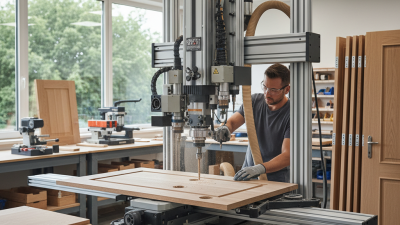
When setting up a workshop, choosing the right tools is essential. Hinge Hole Drilling Machines play a pivotal role in this process. These machines help ensure accurate hinge placements, which is crucial for door installation.
Selecting the right model requires careful consideration. Various factors come into play, such as drilling speed, depth settings, and ease of use. Each workshop has unique needs, which makes one model better suited than another. Not all machines offer the same level of precision or durability. Some may even fall short in repetitive tasks.
Mistakes can happen, and a poor choice can lead to wasted time and resources. Workshops should also consider the space available for using these machines. Finding the perfect balance between functionality and space efficiency is key. Ensuring the machine aligns with the workshop's workflow is critical. Always remember that the right decision today impacts future projects.
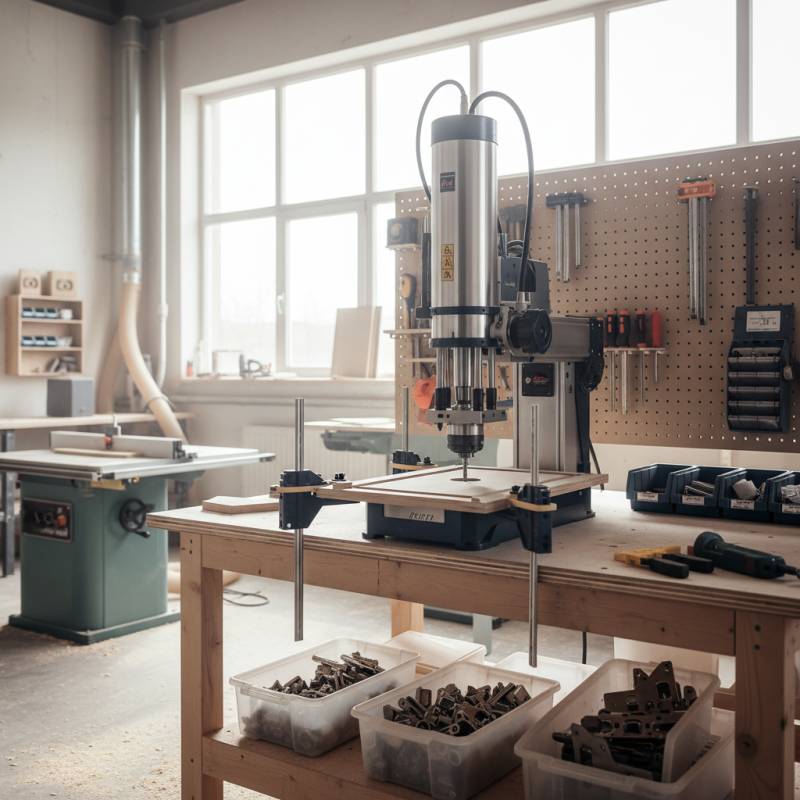
Factors to Consider When Selecting Hinge Hole Drilling Machines
When selecting hinge hole drilling machines, several factors come into play.
Consider the size and type of hinges you typically work with. Different machines have varying capabilities.
Look for one that accommodates your most common projects. Stability is crucial for accurate drilling.
A sturdy design can significantly reduce errors.
Tips: Always check reviews. Real-life user experiences can reveal potential flaws.
Don’t overlook the importance of ease of use. A complex machine might slow you down.
Think about the learning curve involved.
Power and speed settings matter too. A machine with adjustable speeds allows for versatility.
This is especially useful for different materials. You might struggle with consistency if your machine lacks this feature.
Tips: Opt for machines with safety features. These protect you during operation.
Investing in reliable equipment can save you time and future headaches.
Remember, a more expensive machine isn’t always better.
Take time to assess your specific needs before making a decision.
Understanding Different Types of Hinge Hole Drilling Machines
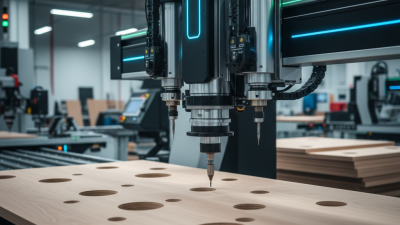
When selecting a hinge hole drilling machine, understanding the different types is crucial. Conventional machines vary significantly in functionality. For instance, single-spindle models typically support lighter workload requirements. They can drill holes in standard sizes but lack versatility. According to industry reports, about 35% of workshops find single-spindle machines sufficient for basic projects.
On the other hand, multi-spindle machines can handle more complex tasks. They offer higher productivity and can drill multiple holes simultaneously. This efficiency can boost output by up to 50%, especially for bulk orders. However, they may lead to overinvestment if your projects are sporadic or small-scale.
Careful assessment of your workshop's needs is essential to avoid unnecessary costs.
Portable options are also worth considering. They allow for flexibility in tight spaces. While they are convenient, some users may find the performance lacking compared to stationary machines. It's essential to weigh portability against the machine's robustness. Effective research and trials can certainly help clarify the best fit for your specific workflow requirements.
Evaluating the Machine's Speed and Precision for Optimal Performance
When choosing hinge hole drilling machines, speed and precision are crucial. A machine that operates too slowly can waste time in a busy workshop. You might find yourself falling behind on projects. Adjustable speed settings allow for flexibility, catering to different materials and tasks. Ensure the machine has a range of speeds to maintain efficiency.
Precision is equally important. Inaccurate drilling can lead to misalignments, affecting the final outcome of your work. Look for features like laser guides or depth stops that enhance accuracy. Test the machine’s performance with various stock. Watch for any inconsistencies in the holes drilled. These imperfections may require additional adjustments or work, leading to frustration and wasted materials.
Consider your specific needs. A machine that's fast but lacks precision might not be the best fit. Conversely, ultra-precise machines can be slow to operate. Strike a balance that suits your workshop's demands. Reflect on your workflow. Evaluate whether speed or precision is currently a greater challenge for your tasks.
Importance of Drill Bit Compatibility in Hinge Hole Drilling Machines
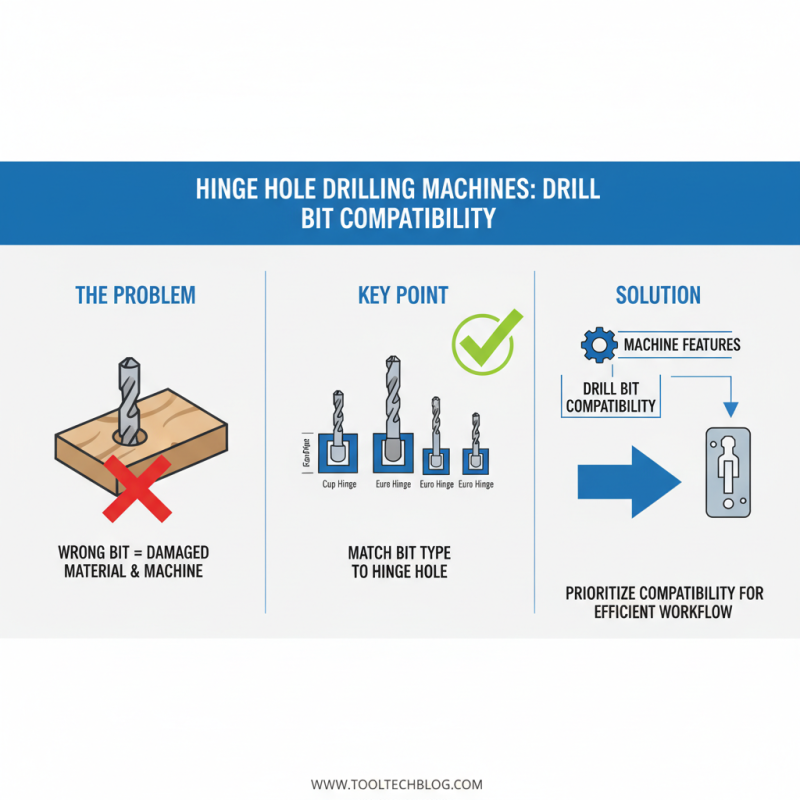
When selecting hinge hole drilling machines, drill bit compatibility is crucial. A machine might have excellent features, but if the bits do not fit, it’s useless. Various types of hinge holes require specific drill bits. Using the wrong bit can damage both the material and the machine.
Moreover, drill bits come in different sizes and designs. Choosing the right bit often requires understanding the hinges you plan to install. For example, some hinge types need deeper holes than others. If a bit is too short, the holes won’t meet the required depth. Always check specifications before making a purchase.
It can be frustrating when a drill bit doesn’t perform as expected. Sometimes, even slight differences in diameter can cause issues. A poorly fitting bit leads to inconsistent holes. This can affect the installation process. Reflecting on these details will save time and resources. Opting for compatible drill bits makes all the difference.
Assessing Cost-Effectiveness and ROI of Hinge Hole Drilling Machines
When selecting hinge hole drilling machines, cost-effectiveness is crucial. An expensive machine may promise high precision but might not fit every workshop's budget. Consider the machine's specifications carefully. High-speed operations can enhance productivity, yet they often come at a steep price. Assess whether your projects require such speed or if a more affordable option suffices.
Return on investment (ROI) becomes an essential measure over time. A machine that offers versatility might cost more upfront but could handle diverse tasks. This reduces the need for multiple machines. Calculate potential savings. Could maintenance costs offset initial expenses? Some machines might require frequent repairs, leading to extra costs. Balance performance and durability to avoid future regrets.
Moreover, reflect on past purchases. Did you prioritize features that turned out unnecessary? Take time to evaluate your workshop's specific needs. This can guide you in making a better investment. The right choice should enhance workflow while remaining financially viable. Remember, a knowledgeable decision today can prevent costly mistakes tomorrow.
How to Choose Hinge Hole Drilling Machines for Your Workshop? - Assessing Cost-Effectiveness and ROI of Hinge Hole Drilling Machines
| Machine Model |
Cost ($) |
Drilling Speed (holes/min) |
Power Consumption (kW) |
Maintenance Cost/Year ($) |
Estimated ROI (%) |
| Model A |
3500 |
80 |
2.0 |
300 |
25 |
| Model B |
4500 |
90 |
1.8 |
400 |
30 |
| Model C |
5300 |
100 |
2.5 |
500 |
35 |