How to Choose the Best 5-Axis Machines for Your Needs?

How to Choose the Best 5-Axis Machines for Your Needs?

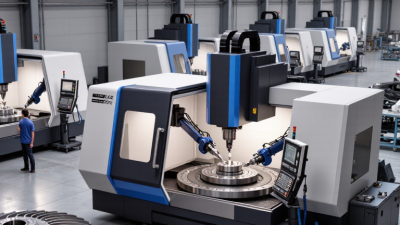
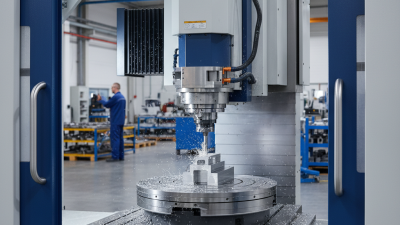
Choosing the best 5-Axis Machines for your needs begins with the part, not the machine catalog. A complex aerospace impeller, a medical implant, and a large mold demand different working envelopes, spindle speeds, control systems, and automation options. In real workshops, a machine that looks powerful on paper may struggle with vibration, chip evacuation, or operator training. That gap matters.

Dr. Tony Schmitz, a respected machining dynamics expert, offers a useful perspective: “The machine tool is part of the cutting process, not merely a platform for it.” This principle should guide every purchase decision. Examine the materials, tolerances, surface finishes, batch sizes, and cutting tools your team uses daily. Check spindle torque at low speeds, axis travel, rotary-table accuracy, thermal stability, and collision-avoidance functions. Ask suppliers for test cuts using your own material and tooling. A polished demonstration is not enough.

Budget matters, but the cheapest option can become expensive through downtime, difficult programming, and limited service support. Review installation requirements, maintenance access, controller familiarity, and technician response times. Speak with current users, not only sales representatives. Their shop-floor experience may reveal uncomfortable details.

There is no universal winner.

A practical choice may still involve compromise. You might accept a smaller table for faster dynamics, or choose lower spindle speed for stronger torque. Reconsider the decision after comparing real production data. The best 5-Axis Machines are those that reliably produce your parts, support your operators, and remain useful as your work changes.
How to Choose the Best 5-Axis Machines for Your Needs?

Define Your Machining Requirements and Production Goals

Choosing the best 5-axis machine starts with defining the work, not comparing machine specifications. List the materials, part dimensions, tolerances, surface finishes, and undercut features your shop regularly handles. A titanium impeller needs different cutting stability than an aluminum housing. Record spindle load, cutting time, tool changes, and scrap rates from current jobs. These details reveal practical limits that brochures often hide.

Production goals matter just as much. Decide whether the machine will support prototypes, repeat batches, or continuous production. Estimate monthly volume, required cycle time, available floor space, and operator skill. Check whether your team can manage fixture design, toolpath verification, probing, and maintenance. A machine with impressive travel may still be unsuitable if setup time remains excessive. My early capacity estimates were too optimistic because I ignored fixture changes. That mistake was expensive. Leave room for training, unexpected downtime, and future part sizes. Small trials using representative components can expose vibration, chip evacuation, or access problems before purchase. Measure results carefully, and question assumptions that seem convenient. Reliable decisions come from verified production data, clear tolerances, and goals your team can actually maintain.

How to Choose the Best 5-Axis Machines for Your Needs? - Define Your Machining Requirements and Production Goals

Production Requirement Recommended Machine Profile Typical Work Envelope Typical Spindle Range Typical Workpiece Load Key Selection Priorities
Small, complex components Compact simultaneous 5-axis machining center Approximately 300–600 mm X, 300–500 mm Y, 300–500 mm Z 12,000–24,000 rpm; about 10–30 kW Approximately 100–500 kg Compact footprint, high acceleration, short tool-change time, strong thermal stability
Medium-size prismatic parts General-purpose trunnion-table or swivel-head 5-axis machine Approximately 600–1,000 mm X, 500–800 mm Y, 500–700 mm Z 8,000–18,000 rpm; about 15–40 kW Approximately 500–1,500 kg Work envelope, table rigidity, accessibility, chip evacuation, and repeatability
Large structural components Large-bed 5-axis machining center with extended Z travel Approximately 1,000–2,500 mm X, 800–1,500 mm Y, 700–1,200 mm Z 6,000–15,000 rpm; about 25–60 kW Approximately 1,500–5,000 kg Machine rigidity, axis stroke, foundation requirements, torque, and volumetric accuracy
High-speed aluminum machining High-speed 5-axis machine with a lightweight rotary unit Approximately 500–1,500 mm X, 400–900 mm Y, 400–700 mm Z 15,000–30,000 rpm; about 15–45 kW Approximately 300–1,500 kg High acceleration, balanced spindle, efficient coolant delivery, and fast control processing
Hard metals and difficult materials Rigid 5-axis machine with high-torque spindle and robust thermal control Approximately 500–1,200 mm X, 400–900 mm Y, 400–800 mm Z 5,000–15,000 rpm; about 20–50 kW Approximately 500–2,000 kg Low vibration, high torque at low speed, rigid fixturing, coolant pressure, and thermal compensation
Prototype and low-volume work Flexible 5-axis machine with rapid setup and broad tooling compatibility Approximately 400–800 mm X, 300–600 mm Y, 300–600 mm Z 8,000–18,000 rpm; about 10–30 kW Approximately 200–1,000 kg Easy programming, probing, accessible fixtures, quick changeover, and broad material capability
Medium- to high-volume production Automation-ready 5-axis cell with pallet handling or robotic loading Approximately 600–1,200 mm X, 500–900 mm Y, 500–800 mm Z 8,000–20,000 rpm; about 15–45 kW Approximately 500–2,000 kg Spindle utilization, unattended operation, tool monitoring, pallet exchange, and process repeatability
Practical evaluation checklist: Confirm the required work envelope, maximum part weight, material hardness, spindle torque, rotary-axis range, positioning accuracy, repeatability, tool capacity, coolant system, automation interface, floor space, power supply, and expected annual production volume before selecting a 5-axis machine.

Compare 5-Axis Machine Types and Kinematic Configurations

Choosing the best five-axis machine starts with its kinematic layout, not its advertised axis count. The machine’s structure determines reach, rigidity, speed, and programming behavior.

A table-table machine rotates the workpiece on two rotary axes. It offers strong cutting stability for compact parts and moderate tool angles. However, large or heavy workpieces can challenge its rotary table.

A head-table configuration combines a tilting spindle with a rotating table. It handles taller parts and provides useful access around complex surfaces. Yet, the table still limits workpiece size and may reduce acceleration.

A head-head machine moves both rotary axes through the spindle. It suits large components and keeps the workpiece stationary. Its cutting envelope is flexible, but the moving head demands careful calibration and collision checking.

Kinematic configuration matters just as much. Trunnion-style systems often provide excellent rigidity, especially during aluminum or steel cutting. Swiveling-head systems can reach deep cavities, though tool length and thermal drift become more critical. Check the machine’s rotary-axis range, not only its maximum tilt.

Near a rotary-axis singularity, small programmed movements can create dramatic machine motions. That can leave marks on a curved surface. I have seen this issue appear during a seemingly simple finishing pass. The setup looked correct, but the toolpath needed redesigning.

Review sample parts, spindle torque, axis acceleration, and five-axis simulation results before deciding. A machine that fits today’s part may restrict tomorrow’s fixture, material, or tolerance requirements.

Evaluate Work Envelope, Accuracy, Speed, and Load Capacity

How to Choose the Best 5-Axis Machines for Your Needs?

A 5-axis machine should fit the part, not the brochure. Start with the work envelope. Measure the largest raw block, tool length, fixture height, and rotary swing. Leave clearance for angled cuts and chip evacuation. A tight envelope causes expensive repositioning. I have seen small oversights force several manual setups.

Accuracy needs a practical definition. Check positioning accuracy, repeatability, thermal drift, and volumetric performance under real cutting conditions. ISO 230-2 provides methods for testing linear positioning accuracy and repeatability. Request test results from the actual machine, not only laboratory figures. Speed also needs context. A high-rpm spindle may reduce cycle time, but only with suitable tooling, rigidity, and cooling. According to AMT’s 2023 U.S. Manufacturing Technology Orders report, total orders reached about 4.9 billion dollars. That investment makes measurable productivity essential, not optional.

Tips: Compare cycle-time trials using your material and tools. Check acceleration, rapid-feed rates, and tool-change time. Load capacity must include the fixture, workholding, and cutting forces. A 500-kilogram table rating may shrink after rotary-axis limits are considered. The 2024 World Robotics report recorded more than 500,000 industrial robot installations worldwide in 2023, showing how automation is reshaping production expectations. Still, automation does not repair poor machine selection. Recheck every figure. Real parts can disagree.

Assess Control Systems, Tooling, Automation, and Software Compatibility

How to Choose the Best 5-Axis Machines for Your Needs?

A capable 5-axis machine begins with its control system. Check how smoothly it handles simultaneous motion, tool compensation, and collision warnings. During a shop-floor trial, observe axis response around tight curves. Jerky movement can damage finishes and shorten tool life. Ask whether operators can edit programs directly at the machine. Clear screens reduce setup mistakes, especially during urgent production changes. Cycle simulation is valuable, but it should not replace careful verification.

Tooling decisions deserve equal attention. Confirm spindle speed, taper type, tool capacity, and automatic tool-change time. Match these details with your materials and cutting strategies. A powerful spindle may be unnecessary for small aluminum parts. It may also be insufficient for demanding hardened components. Automation should fit your workload, not impress visitors. Pallet changers, probing systems, and robotic loading can reduce idle time. However, complex automation adds maintenance points. I once underestimated cleaning requirements around a probing system. That mistake caused avoidable downtime.

Tips: Test real parts, not only sample demonstrations. Bring your longest tool and heaviest fixture. Measure setup time, repeatability, and operator workload. Also check software compatibility with your existing CAD/CAM workflow. Postprocessors must generate reliable rotary-axis movements. Review simulation results with an experienced programmer. A small mismatch can create expensive scrap. Leave room for learning. Even skilled operators need time to understand a new control interface. Perfect integration is uncommon. Careful testing matters more.

Calculate Total Ownership Costs and Select the Right MachineETwitter

Choosing a five-axis machine requires more than comparing purchase prices. I calculate total ownership cost across its useful life. Start with acquisition, freight, installation, software, tooling, training, and financing. Include annual maintenance, coolant, electricity, inspection, and replacement parts. Downtime deserves its own line.

The International Energy Agency’s Energy Efficiency 2023 report identifies industry as responsible for about 37% of global final energy demand. That makes power consumption relevant, even for a compact machine. The U.S. Department of Energy’s compressed-air guidance estimates that leaks can waste 20–30% of compressor output. Check air demand, standby power, and chip-management requirements before accepting the supplier’s estimate. Those small figures accumulate.

I also model production reality. Record cycle time from a test cut, not a sales sheet. Add loading, probing, tool changes, cleaning, and inspection. Then compare annual capacity against labor cost and expected utilization. A faster spindle may not improve output if fixtures are slow. It happens. Include five-year downtime scenarios, spare-part availability, and operator training hours. I leave a contingency reserve because my first forecast is rarely perfect. A machine with a higher purchase price may deliver lower cost per finished part, but only when utilization, maintenance quality, and process stability support the calculation. Use verified data from machine trials, utility bills, maintenance records, and the 2024 Industry 4.0 surveys published by national manufacturing agencies.

WhatsApp Online Chat !