How to Choose the Right CNC Router for Your Business Needs?
Choosing the right CNC router can significantly impact your business. This machine is crucial for various applications, from woodworking to metal fabrication. With numerous options available, selecting the most suitable one may seem daunting.
Understanding your specific needs is vital. Different CNC routers offer various features. Some may excel in speed, while others are designed for precision. It’s essential to analyze the materials you plan to work with. For instance, working with softer materials may allow different machine specifications compared to harder ones.
Investing in a CNC router is a long-term commitment. Consider the maintenance and support offered by manufacturers. A reliable company provides not just a machine but also the necessary guidance. Take the time to research different models and their capabilities. A well-chosen CNC router can enhance productivity and efficiency in your business.
What is a CNC Router and How Does It Work?
A CNC router is a powerful tool used in various industries, from woodworking to metal fabrication. It automates the cutting and engraving of materials, enhancing precision and efficiency. According to a report by Market Research Future, the global CNC router market is expected to grow at a CAGR of over 5% through 2027, indicating the rising demand for these machines.
These routers operate using computer numerical control, meaning they follow programmed commands to execute complex cuts. The technology allows for high accuracy, which is crucial in manufacturing. For instance, a study published by the International Journal of Advanced Manufacturing Technology noted that CNC routers can achieve tolerances as tight as ±0.1 mm. This level of precision can significantly reduce material waste and improve production timelines.
Despite their advantages, choosing the right CNC router requires careful consideration. The market is flooded with options that claim high performance, but not all meet industry standards. A mismatch between the router's capabilities and your specific needs may lead to inefficiencies. It's essential to evaluate your workload, material types, and the anticipated volume of production before making a choice, as investing in an ill-suited machine can be detrimental.
How to Choose the Right CNC Router for Your Business Needs? - What is a CNC Router and How Does It Work?
| Feature |
Description |
Importance |
| Cutting Area Size |
The maximum size of the material that can be processed. |
Crucial for determining the scale of projects. |
| Motor Type |
Stepper or servo motors impact precision and speed. |
Affects accuracy and repeatability of CNC processes. |
| Spindle Power |
Power rating of the spindle impacts cutting ability. |
Essential for cutting harder materials effectively. |
| Material Compatibility |
Types of materials the CNC router can handle. |
Determines versatility and applications in different industries. |
| Software Compatibility |
Compatibility with CAD/CAM software for design. |
Important for workflow efficiency and ease of use. |
| Budget |
Cost range for CNC routers varies widely. |
Critical for financial planning and investment return. |
| Customer Support |
Quality of technical support and service offered. |
Vital for troubleshooting and maintenance success. |
Key Factors to Consider When Selecting a CNC Router
When selecting a CNC router, consider the type of materials you'll be working with. Some routers excel with wood, while others handle metal or plastics better. Knowing your material can guide you toward the right choice. Think about the thickness and density of your materials. These factors directly impact the power and capabilities you will need in your machine.
Size is another important aspect to consider. Measure your workspace. Ensure the CNC router fits comfortably within that area. A cramped environment can lead to operational inefficiencies. Additionally, think about your production volume. A small shop may not need an industrial-grade router. Reflect on your current needs and anticipated growth. It’s wise to avoid overspending on features you may not need.
Don’t overlook the control software compatibility. Some routers come with proprietary systems, while others support popular software. It’s essential to choose a router that works seamlessly with your current setup. Finally, consider the support and warranty options. A reliable machine is only as good as the backup service. Ensure that you understand the terms and have access to support if issues arise.
Key Factors to Consider When Selecting a CNC Router
This chart illustrates the key factors to consider when selecting a CNC router for your business needs, rated on a scale of 1 to 10 by their importance. Price and durability are the most critical factors, followed by precision and ease of use, while customer support is slightly less prioritized.
Understanding Different Types of CNC Routers and Their Applications
When choosing a CNC router, understanding the various types and their applications is crucial. There are primarily three main types: gantry, router table, and laser CNC routers.
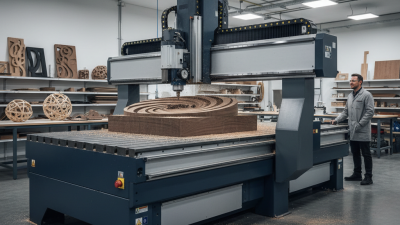
Gantry routers offer mobility and larger working areas. They are often used for cutting large sheets of materials, making them ideal for woodworkers and sign makers.
Router tables, on the other hand, are more compact and suited for detailed work on smaller pieces. They excel in tasks like engraving and intricate design work.
Laser CNC routers bring precision to the forefront. Their capability to cut and engrave various materials—including wood, acrylic, and metal—makes them versatile. However, they require more maintenance and care compared to other types. Not every business needs the same router. A larger business may prioritize speed and productivity, while smaller operations may focus on precision and detail. Reflecting on these factors can help in making the right choice. It’s often a balance between budget, space, and the specific demands of the projects you'll undertake. Each option has its learning curve and limitations. Choosing the right CNC router means asking the right questions about your unique needs.
Evaluating CNC Router Specifications: Power, Speed, and Precision
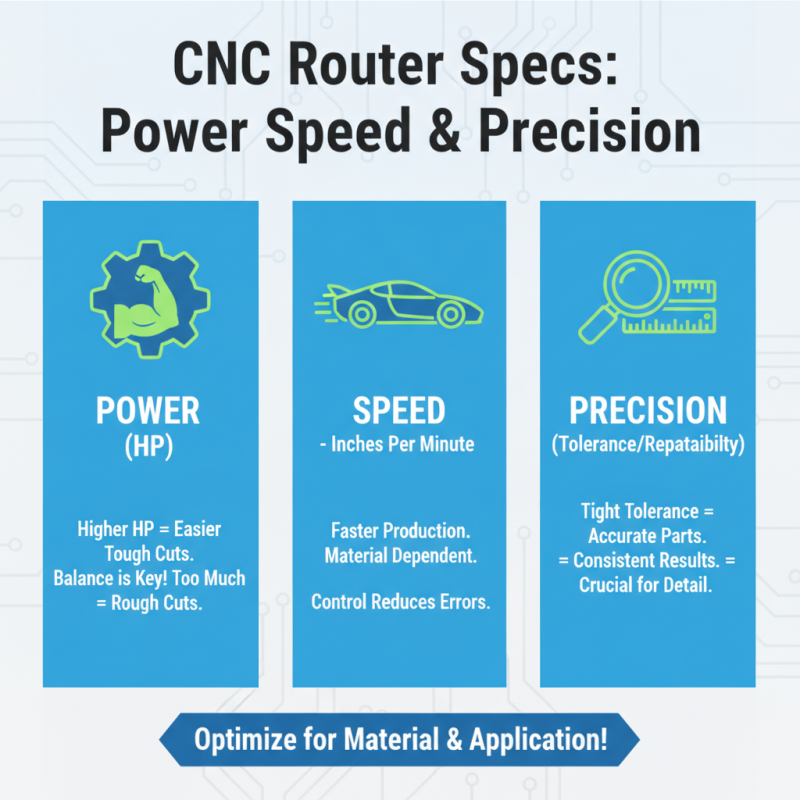
When evaluating CNC router specifications, power, speed, and precision are vital factors. The power of a CNC router is often measured in horsepower. A higher horsepower allows for cutting through tough materials with ease. However, too much power can lead to rough cuts. It’s essential to find the right balance to match your specific application and material type.
Speed is another critical aspect. It influences the overall efficiency of your production line. Faster routers can significantly reduce production time. But, high-speed operations may compromise the quality of the cut. It's crucial to consider the nature of your projects. Are precision and detail more important than speed? A router with variable speeds can be quite beneficial here.
Precision defines the end quality of your work. A CNC router's accuracy is typically measured in terms of tolerance. Tight tolerances are essential for intricate designs. Yet, achieving high precision may require additional adjustments and calibrations, which can be time-consuming. Finding a machine that balances these specifications requires careful thought and consideration. Understanding your specific business needs will guide you in making the right choice.