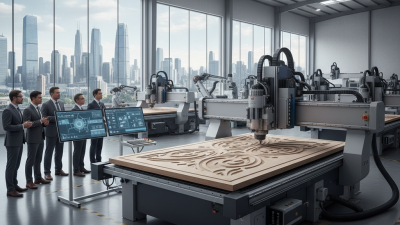
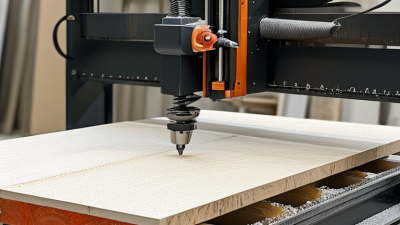
Global buyers increasingly view Routing Machines as production infrastructure, not optional workshop equipment. These machines cut wood, plastics, composites, and non-ferrous materials with repeatable speed. A cabinet panel can leave the table precisely drilled, grooved, and shaped. That consistency matters when suppliers serve several countries.
The market evidence is substantial. Grand View Research valued the global CNC machine market at approximately USD 83.8 billion in 2023. It forecasts a 10.3% compound annual growth rate from 2024 to 2030. The report covers broader CNC equipment, not Routing Machines alone. That limitation deserves attention. Still, it signals strong investment in programmable manufacturing. The International Federation of Robotics reported 541,302 industrial robots installed worldwide in 2023. Automation is becoming normal.
But machines do not remove every business risk. Poor tooling, unstable software, weak dust extraction, and limited operator training can quickly erase promised savings. Buyers should examine spindle power, working area, controller compatibility, service coverage, and spare-parts availability. A low purchase price may become expensive after one failed production week.
Peter Zelinski, editor-in-chief of Modern Machine Shop, has described CNC machining as “a digital process from design to production.” That observation explains the real value of Routing Machines. They connect drawings, toolpaths, materials, and repeatable output. They also create measurable production data. For global buyers, this supports quality audits and more consistent supplier performance. Not perfectly, though. Human judgment still matters. A reliable machine strengthens a process; it cannot rescue a careless one.
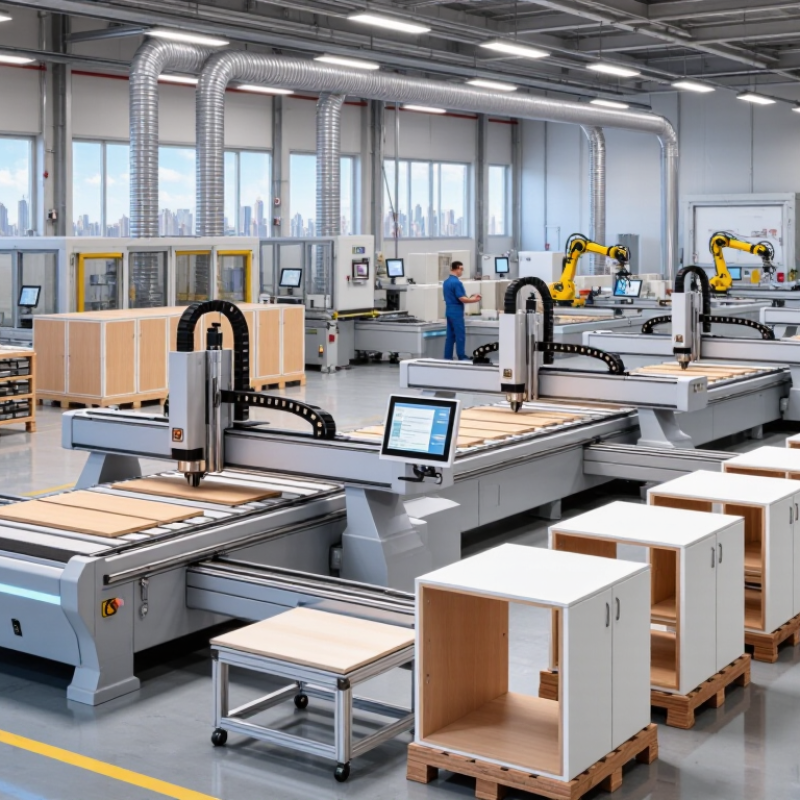
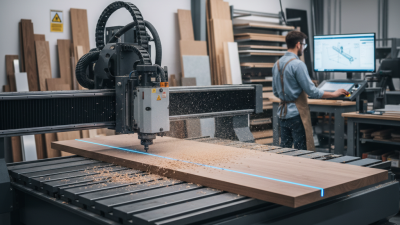
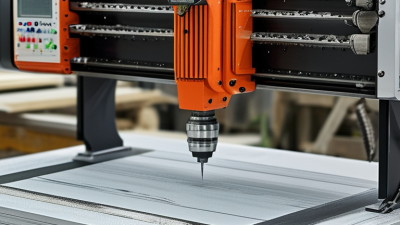
A routing machine is a computer-controlled cutting system for shaping wood, plastics, composites, and some non-ferrous materials. It uses a spindle, cutting tool, gantry, guide rails, and controller. CAD software creates the design, while CAM software converts it into toolpaths. The controller then moves the spindle across the X, Y, and Z axes.
The process is precise. Usually.
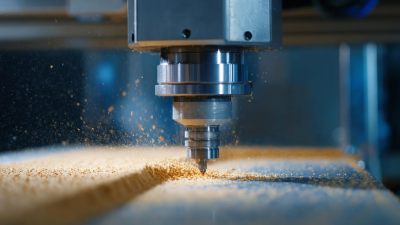
A vacuum table or clamps hold the sheet firmly during cutting. The spindle rotates at high speed, removing material layer by layer. Feed rate, cutting depth, tool diameter, and spindle speed must match the material. A poor setting can leave burn marks, rough edges, or damaged corners. According to Grand View Research, the global CNC machine market was valued at about USD 86.8 billion in 2023. This growth reflects rising demand for automated, repeatable production across industries.
Routing machines matter to global buyers because they shorten setup time and support flexible production. A supplier can produce cabinet panels, signs, molds, or prototypes from digital files. MarketsandMarkets projects the CNC machine market will continue expanding through 2028, driven partly by smart manufacturing and labor efficiency. Buyers should still examine working area, motor power, control compatibility, dust collection, and after-sales training. A machine may look impressive in a specification sheet but perform poorly with unstable software or weak fixtures. That detail is easy to miss. ISO 230-1 also reminds engineers that machine accuracy depends on testing conditions, not marketing claims alone.
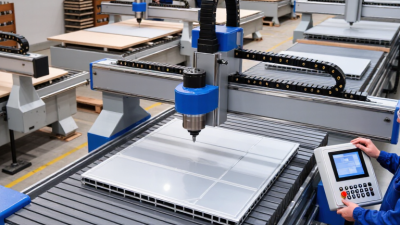
Why Do Global Buyers Need Routing Machines?
Global buyers need routing machines because they support accurate, repeatable cutting across many materials. A suitable machine can process wood, plastics, composites, and selected non-ferrous sheets. This flexibility helps factories serve different markets without purchasing separate equipment for every project.
In real production settings, routing machines create clean grooves, holes, edges, and relief patterns. Digital controls improve consistency between batches. This matters when a buyer orders replacement panels months later. Operators can save cutting files, adjust measurements, and reproduce approved designs with fewer manual errors. Good dust extraction also keeps work areas cleaner and protects sensitive components.
Reliable routing depends on more than machine power. Buyers should examine spindle speed, working size, software compatibility, safety systems, and technical support. A machine that looks affordable may create expensive downtime. That lesson is easy to overlook.
Export buyers also need stable documentation and practical training. Clear manuals, wiring information, spare-part guidance, and remote troubleshooting reduce communication problems. Local voltage and workshop conditions require careful checking before shipment. Some buyers focus too heavily on maximum speed. In practice, accuracy and service response often matter more.
Routing machines are not magic. Tool wear, incorrect settings, and poor material holding can still damage a finished part. Experienced teams test samples before full production. They also record cutting parameters for future jobs. This cautious approach may slow the first order, but it can protect quality across international deliveries.
Typical CNC routing-machine specifications that support consistent production, flexible material processing, and international manufacturing requirements
CNC routing machines are essential for global buyers because they combine repeatable accuracy, high-speed cutting, digital production control, and the ability to process materials such as wood, plastics, composites, and non-ferrous metals. The figures shown represent commonly specified capability ranges for industrial CNC routers; actual performance varies by machine configuration, tooling, material, and operating conditions.
Routing machines are essential for global buyers because they shape materials accurately and repeatedly. Their applications extend across furniture, cabinetry, interior design, signage, packaging, construction, and aerospace components. Workshops often route plywood, MDF, hardwood, acrylic, PVC, aluminum sheets, foam, and composite panels. Each material creates different cutting demands. A clean edge on acrylic may require different tooling than a deep cut in hardwood. Dust extraction also matters, especially in busy production areas. Poor extraction can reduce visibility and damage finished surfaces.
Manufacturers use routing machines for cabinet doors, wall panels, display fixtures, insulation parts, and detailed decorative work. Aluminum routing requires stable movement, suitable cutters, and controlled feed rates. Foam cuts quickly, but excessive speed can melt or deform its edges. Composite materials may produce abrasive dust and shorten tool life. In practical testing, small setup errors often become visible only after several repeated cuts. This is easy to underestimate. Global buyers should examine tolerance, working size, spindle power, software compatibility, operator training, and maintenance access. A powerful machine is not always the best choice.
Tips: Test the exact material before purchasing. Request sample cuts and inspect edge quality. Check local service support and spare-part availability. Do not judge performance by speed alone. A slower, stable process may produce fewer rejected panels and lower long-term costs.
| Industry | Common Material | Typical Material Form | Typical Thickness Range | Typical Routing Applications | Recommended Machine Features | Why Routing Is Valuable |
|---|---|---|---|---|---|---|
| Signage and Visual Communication | PVC foam board, acrylic, aluminum composite panel | Flat sheets and laminated panels | 2–20 mm | Letter cutting, contour cutting, engraving, grooving, and V-cutting | High-speed spindle, vacuum table, dust extraction, and automatic tool changing | Produces clean edges and repeatable graphics with efficient sheet utilization |
| Furniture and Cabinet Manufacturing | Plywood, MDF, particleboard, and solid wood | Boards, panels, and timber components | 6–30 mm | Panel sizing, cabinet joints, slots, drilling, profiling, and decorative carving | Rigid gantry, multi-tool capability, vacuum hold-down, and nesting software | Improves dimensional consistency and reduces manual cutting and material waste |
| Aerospace and Transportation Interiors | Honeycomb panels, fiberglass composites, carbon-fiber laminates, and aluminum sheet | Sandwich panels and thin composite sheets | 1–25 mm | Panel trimming, apertures, edge profiling, countersinking, and template production | High rigidity, closed-loop motion control, dust containment, and specialized cutting tools | Supports accurate, low-force machining of lightweight and layered materials |
| Marine and Boatbuilding | Marine plywood, foam core, fiberglass, and composite board | Large panels, templates, and curved components | 6–50 mm | Hull templates, bulkheads, deck components, interior panels, and mold patterns | Large working area, strong vacuum system, corrosion-resistant components, and long-reach tooling | Handles large-format parts while maintaining repeatable contours and hole locations |
| Architecture and Interior Design | MDF, plywood, acrylic, gypsum board, and natural stone composites | Decorative panels, wall panels, and design elements | 3–40 mm | 3D relief carving, perforated panels, custom screens, lettering, and architectural mock-ups | Three-axis or five-axis motion, 3D CAD/CAM compatibility, and fine-resolution control | Converts complex digital designs into detailed physical parts with consistent quality |
| Packaging and Display Production | Corrugated cardboard, honeycomb board, foam board, and paper-based panels | Sheets and lightweight structural boards | 2–25 mm | Creasing, slotting, kiss cutting, prototype packaging, and point-of-sale displays | Oscillating knife, creasing wheel, camera registration, and quick-change tooling | Enables rapid prototyping and short-run production without dedicated dies |
| Insulation and Construction Components | Rigid polyurethane foam, expanded polystyrene, extruded polystyrene, and mineral-fiber board | Rigid boards and molded insulation blocks | 10–150 mm | Insulation shaping, service openings, construction templates, and model fabrication | Long cutting tools, high-clearance gantry, low-pressure hold-down, and efficient chip removal | Cuts thick, lightweight materials accurately without the crushing force of some conventional processes |
| Prototyping and Product Development | Engineering plastics, acrylic, wood, foam, and composite panels | Prototype sheets, blocks, and model boards | 1–80 mm | Functional prototypes, fit checks, housings, fixtures, and design models | Flexible tooling, CAD/CAM integration, short setup time, and accurate positioning | Shortens the transition from digital design to testable physical components |
| Electrical and Control-Panel Fabrication | ABS, polycarbonate, acrylic, phenolic laminate, and aluminum panels | Enclosure doors, front panels, and insulating sheets | 1–12 mm | Switch openings, cable entries, engraved labels, countersinks, and mounting holes | Small-diameter tooling, precise drilling, dust extraction, and repeatable positioning | Provides accurate openings and identification marks for custom electrical assemblies |
Routing machines improve production efficiency by turning digital designs into repeatable cutting paths. A CNC router can process wood, plastics, composites, and non-ferrous materials with consistent speed. Automatic tool changes reduce manual pauses. Vacuum tables also limit movement during cutting.
Deloitte’s 2024 Smart Manufacturing and Operations Survey found that 86% of manufacturers expect smart manufacturing to become a major competitiveness driver within three years. Routing machines support this shift through programmable toolpaths, nesting software, and production data. A buyer can load several panels, reduce material gaps, and repeat the same pattern across different orders. That matters in global production, where labor costs, delivery times, and quality expectations vary sharply.
The machine is not magic. Poor calibration creates uneven edges, burnt surfaces, and expensive rework. Operators must check spindle speed, feed rate, bit condition, and dust extraction. The World Economic Forum’s Global Lighthouse Network reports that leading factories have achieved major gains through connected data and process control, including productivity improvements above 20% in some cases. A router can contribute to similar gains when linked with inspection and scheduling systems. Yet many workshops still measure output only by machine hours. That misses setup time, rejected parts, and idle operators. Real efficiency is less perfect, but it becomes visible.
Before purchasing a routing machine, global buyers should match the equipment to real production needs. Identify the materials, sheet sizes, cutting depth, tolerance, and daily workload. A machine for thin plywood may struggle with aluminum or dense plastics. Do not trust impressive speed alone. Cutting accuracy, spindle stability, and repeatability matter more during long production runs.
Power requirements deserve careful attention. Check voltage, frequency, phase, plug standards, and workshop capacity before ordering. Confirm the machine’s footprint, access doors, ventilation, and dust collection space. Ask for measured specifications, not general marketing language. Request sample cuts using your own drawings and materials. Small differences become expensive mistakes.
Supplier support can determine whether the machine remains productive. Review warranty coverage, spare-part availability, remote troubleshooting, manuals, and operator training. Clear documentation builds confidence across language and time-zone barriers. Buyers should also calculate shipping, installation, tooling, software, maintenance, and import-related costs. The listed price is rarely the final cost. A local technician may be useful, but availability should be verified in writing. Check safety features, emergency stops, guarding, and conformity documents relevant to your region. Experienced operators often notice practical weaknesses during a demonstration. New buyers may overlook them. That is understandable, but risky. I would also plan for routine cleaning and calibration, because neglected maintenance quietly reduces accuracy.