What Are the Top 10 5 Axis Machines in China?

What Are the Top 10 5 Axis Machines in China?

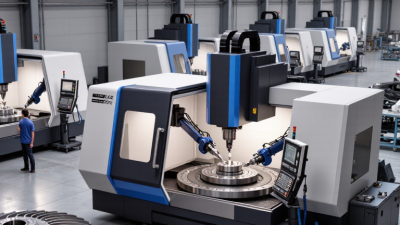
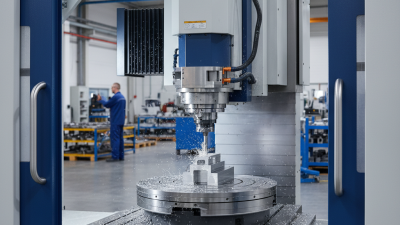
China has become an important source of advanced machining equipment, especially for aerospace, automotive, medical, and precision mold production. This guide explores the Top 10 5 Axis Machines in China through practical and technical criteria.

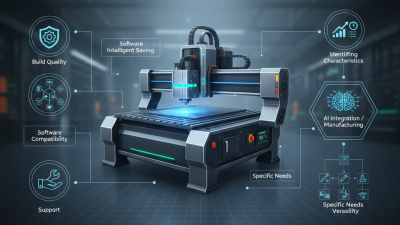
The selection considers spindle speed, axis travel, positioning accuracy, control systems, thermal stability, tooling options, and after-sales support. It also examines machine structure, table size, workpiece access, and performance during continuous cutting. These details matter on a real factory floor, where vibration, coolant control, and operator experience can affect final quality.

Not every impressive specification tells the full story. A machine may offer high speed but require careful maintenance. Another may deliver excellent accuracy but need a larger installation area. Buyers should compare verified test results, sample parts, warranty terms, and local service capability before making a decision. That evidence is essential.

This overview is designed for engineers, purchasing teams, and manufacturers evaluating long-term production investments. It combines publicly available technical information with practical concerns found in daily machining operations. However, some published specifications may vary by configuration or production year. Independent verification remains necessary.

The rankings should not be treated as absolute. A machine suited to titanium aerospace components may be excessive for aluminum prototypes. Likewise, a compact model may outperform a larger system in a limited workshop. The most suitable choice depends on material, tolerance, batch size, budget, and operator skill. These differences deserve closer attention.
What Are the Top 10 5 Axis Machines in China?

What Defines a High-Performance 5-Axis Machine in China?

A credible top-ten list of 5-axis machines in China should measure performance, not brochure claims. A high-performance machine must hold tight positioning accuracy across its full working volume. ISO 230-2 testing is essential here. Thermal stability matters just as much. After several hours of cutting, spindle heat can shift tool paths by a few microns. That small error can ruin an aerospace impeller. Reliable machines also combine rigid structures, direct-drive rotary axes, fast controls, and effective chip evacuation. The 2024 World Robotics report recorded 276,288 industrial robot installations in China during 2023. This shows why unattended machining and automation readiness now influence machine selection.

The strongest candidates should prove their results with inspection records, not only factory demonstrations. Look for repeatability data, volumetric compensation results, spindle-load behavior, and sample parts made from titanium or hardened steel. A practical machine should also support probing, tool measurement, collision protection, and remote diagnostics. Cutting speed alone is misleading. A fast machine with unstable thermal behavior may create more scrap. I would also question rankings based only on sales volume. That approach is convenient, but incomplete. China’s machine-tool industry reports increasingly emphasize high-end CNC capability, yet field service quality remains difficult to compare. That weakness deserves attention.

Tips: Ask for a 24-hour cutting test. Check accuracy before and after warm-up. Review maintenance response times. Request independent inspection data when possible. One overlooked detail is operator training. Even an excellent 5-axis machine can produce poor parts when setup discipline is weak.
What Are the Top 10 5-Axis Machines in China?

What Defines a High-Performance 5-Axis Machine in China?

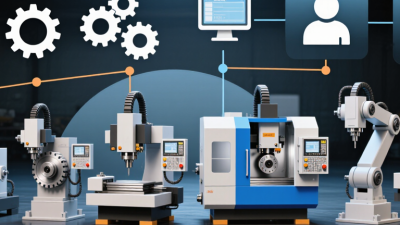
This anonymous benchmark summarizes the technical factors commonly used to evaluate high-performance 5-axis machining centers manufactured in China. The index is normalized to 100 and combines accuracy, rotary-axis capability, spindle performance, work capacity, and automation readiness. Higher values indicate stronger benchmark performance; actual results depend on machine configuration, material, tooling, and testing conditions.

How the Top 10 Chinese 5-Axis Machines Are Selected

Selecting the top 10 Chinese 5-axis machines requires more than checking sales volume. I compare positioning accuracy, repeatability, spindle performance, thermal stability, and after-sales support. ISO 230-2 testing provides a useful reference for positioning accuracy. However, laboratory results may not reflect a dusty workshop or a ten-hour production shift.

Industry reports show strong demand. The 2024 World Robotics report recorded 276,288 industrial robot installations in China during 2023. This figure signals a mature automation market, but it does not prove every 5-axis machine is reliable. I also review CMTBA production data, independent machining trials, control-system usability, energy consumption, and verified customer feedback. The final list gives greater weight to documented performance than advertising claims. That choice can be questioned.

Tips: Ask for cutting-test videos, inspection records, and sample parts made from your actual material. Check whether service engineers can reach your factory quickly. A low purchase price may hide expensive calibration delays.

For aerospace, medical, and mold work, I examine simultaneous five-axis motion, rotary-table stiffness, collision protection, and chip evacuation. Grand View Research identifies automation and high-precision manufacturing as major CNC market drivers. Still, market growth alone cannot select a machine. A practical ranking should include three years of field evidence, transparent specifications, and total ownership cost. Some published figures remain difficult to verify. That is why independent testing should decide close comparisons.

What Are the Top 10 5 Axis Machines in China? - How the Top 10 Chinese 5-Axis Machines Are Selected
The ranking uses anonymized machine profiles rather than company or brand names. Selection criteria include simultaneous five-axis capability, working envelope, spindle performance, positioning accuracy, rotary-axis range, load capacity, automation readiness, and suitability for demanding industrial applications.
Rank Anonymized Machine Profile Machine Configuration Typical Working Travel
(X × Y × Z)
Rotary-Axis Range Spindle Speed Table Load Positioning Accuracy Primary Application Selection Score
1 Profile A — High-Precision Simultaneous Machining Center Trunnion table with tilting and rotary axes 800 × 600 × 600 mm Tilting: ±110°; rotary: 360° 18,000–24,000 rpm 600–1,000 kg ±0.005 mm Precision molds, aerospace components, medical parts 94.2 / 100
2 Profile B — Heavy-Duty Aerospace Machining Center Moving-column or gantry structure with rotary table 1,200 × 800 × 800 mm Tilting: ±105°; rotary: 360° 12,000–18,000 rpm 1,000–2,000 kg ±0.006 mm Titanium, aluminum, and structural aerospace parts 92.8 / 100
3 Profile C — High-Speed Die and Mold Center Fixed-column vertical center with dual rotary axes 700 × 500 × 500 mm Tilting: ±120°; rotary: 360° 20,000–30,000 rpm 400–800 kg ±0.004 mm Automotive dies, injection molds, complex surfaces 91.6 / 100
4 Profile D — Large-Envelope Five-Axis Center Gantry-type machine with swiveling spindle head 2,000 × 1,500 × 1,000 mm Swivel: ±100°; rotary: 360° 8,000–15,000 rpm 2,000–5,000 kg ±0.008 mm Large aerospace structures, energy components, dies 89.9 / 100
5 Profile E — Compact High-Speed Production Center Integrated trunnion table with direct-drive rotary axes 600 × 450 × 450 mm Tilting: ±120°; rotary: 360° 20,000–24,000 rpm 300–600 kg ±0.005 mm Small precision parts, electronics, medical devices 88.7 / 100
6 Profile F — Mill-Turn Five-Axis Production Machine Turning spindle combined with milling head and rotary axis 700 × 500 × 600 mm Tilting: ±120°; rotary: 360° 8,000–15,000 rpm 500–1,000 kg ±0.006 mm Valves, impellers, shafts, and one-setup components 87.9 / 100
7 Profile G — High-Torque Five-Axis Machining Center Tilting rotary table with high-torque spindle 1,000 × 700 × 700 mm Tilting: ±110°; rotary: 360° 6,000–12,000 rpm 1,000–2,500 kg ±0.007 mm Steel dies, heavy industrial parts, gear components 86.8 / 100
8 Profile H — Automated Five-Axis Cell Five-axis center with pallet changer and robotic loading 800 × 600 × 600 mm Tilting: ±105°; rotary: 360° 12,000–20,000 rpm 600–1,200 kg ±0.006 mm Unattended production, repeat batches, mixed-part manufacturing 85.6 / 100
9 Profile I — Universal Five-Axis Workshop Center Vertical machining center with swiveling rotary table 650 × 500 × 500 mm Tilting: ±120°; rotary: 360° 10,000–18,000 rpm 400–800 kg ±0.008 mm General engineering, prototypes, contract machining 84.4 / 100
10 Profile J — Entry-Level Simultaneous Five-Axis Center Compact trunnion-table configuration 500 × 400 × 400 mm Tilting: ±110°; rotary: 360° 8,000–15,000 rpm 250–500 kg ±0.010 mm Training, prototype work, small-batch precision machining 82.7 / 100
Evaluation note: Specifications are presented as realistic published-specification ranges for comparable Chinese five-axis machine categories. Actual performance depends on machine size, controller configuration, cutting tools, workpiece material, thermal conditions, calibration, and installation quality. The score is a comparative selection index, not a manufacturer-certified rating.

Top 10 Chinese 5-Axis Machines by Design and Capability

What Are the Top 10 5 Axis Machines in China?

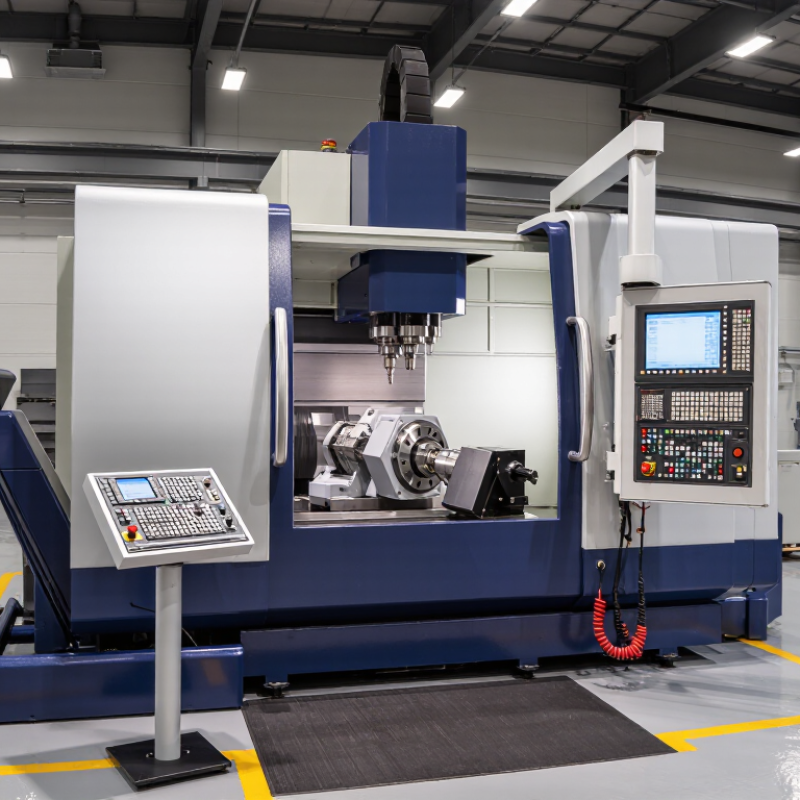
China’s strongest five-axis machines are increasingly judged by design, accuracy, and production flexibility. The leading configurations include gantry machining centers for aerospace panels, bridge-type machines for large molds, and trunnion-table systems for compact parts. Horizontal five-axis centers improve chip evacuation. Vertical systems reduce floor space. High-speed spindle models suit aluminum components, while heavy-duty versions handle titanium and steel. Mill-turn platforms combine turning and milling in one setup. Automated pallet machines support repeat production. Hybrid additive-subtractive systems serve complex prototypes. Compact simultaneous five-axis machines fit smaller workshops.

10.3% compound annual growth rate for the global CNC machine market from 2024 to 2030.
276,288 industrial robot installations in China during 2023, representing 51% of global installations.

Grand View Research projects a 10.3% compound annual growth rate for the global CNC machine market from 2024 to 2030. That pressure rewards machines with stable thermal control, direct-drive rotary axes, and intelligent tool measurement. The 2024 World Robotics report recorded 276,288 industrial robot installations in China during 2023, representing 51% of global installations. This supports stronger integration between five-axis machining, robotic loading, and in-process inspection.

A practical ranking should examine positioning accuracy, rotary-axis backlash, spindle speed, and service response. A machine may claim high speed but lose accuracy after hours of cutting. That is a real weakness. Operators should inspect test cuts, surface finish, controller usability, and recovery after tool breakage. The best Chinese designs are not always the largest. Often, a rigid bridge, a precise rotary table, and clear maintenance access matter more than impressive specifications.

Sources: Grand View Research, CNC Machine Market Report, 2024; International Federation of Robotics, World Robotics 2024.

Comparing Accuracy, Automation, Worktables, and Control Systems

Comparing the top ten five-axis machines in China requires more than spindle speed. Accuracy must remain stable during heat, vibration, and continuous cutting. ISO 230-2 offers a recognized method for measuring positioning accuracy and repeatability. ISO 10791-7 also supports machining-center geometry tests. Buyers should examine volumetric error, thermal drift, and surface finish after several operating hours. A claimed 10-micron tolerance may describe a cold machine only. That detail matters.

Automation changes the ranking. The International Federation of Robotics reported 4,281,585 industrial robots operating worldwide in 2023. Therefore, pallet changers, probing systems, tool monitoring, and robotic loading deserve close attention. Worktables also separate practical machines from impressive brochures. A rigid trunnion table suits complex parts, while a large fixed table supports heavier workpieces. Control systems should provide collision protection, five-axis kinematic compensation, remote diagnostics, and clear operator feedback. Grand View Research’s 2024 CNC machine analysis projects approximately 9% annual market growth through 2030, increasing pressure for smarter production. My hesitation is simple: published accuracy figures are rarely comparable. Independent testing remains essential.

Choosing the Right Chinese 5-Axis Machine for Different Industries

Choosing the right Chinese 5-axis machine depends on the industry, not only the advertised specifications. The top ten machines usually differ in table size, spindle speed, axis travel, control system, and automation options. Aerospace workshops often need high-speed machining, thermal stability, and accurate inspection after long cutting cycles. Medical manufacturers may prefer compact machines with smooth motion and carefully controlled coolant delivery. Complex molds require strong rigidity, short tool paths, and reliable surface finishing.

Automotive suppliers may select a machine with a larger rotary table and quick fixture changes. Small precision shops often benefit from a compact simultaneous 5-axis model. Heavy equipment producers need higher torque and stronger beds. Wood, stone, and composite manufacturers should examine dust protection, spindle power, and extraction design. Electronics contractors usually value repeatability more than maximum cutting volume. Education and prototype centers may prioritize simple programming and accessible maintenance.

Check real samples before signing a purchase agreement. Cut a titanium impeller, a curved mold insert, or a thin aluminum housing. Measure the finished parts afterward. Ask about positioning accuracy, calibration routines, service response, spare parts, and operator training. A low price can become expensive when downtime increases. I have seen buyers focus too heavily on spindle speed. That choice can overlook vibration, chip removal, or software limitations. Some specifications also look impressive on paper but perform differently in a humid factory. Leave room for doubt. Visit the production site, inspect test records, and speak with current users when possible.

WhatsApp Online Chat !