2026 Top Panel Drilling Machines for Global Buyers?

2026 Top Panel Drilling Machines for Global Buyers?

Choosing the right Panel Drilling Machines in 2026 requires more than comparing prices or glossy brochures. Global buyers need equipment that matches real production conditions. A compact furniture workshop may value a small footprint and fast setup. A large cabinet factory may prioritize drilling speed, automatic loading, and continuous operation. These needs are not interchangeable.

This guide examines leading Panel Drilling Machines through practical purchasing criteria. We consider spindle performance, drilling accuracy, software compatibility, worktable design, dust extraction, safety features, and after-sales support. In a real workshop, a machine’s performance appears in small details. A clean 32-millimeter hole pattern matters. So does stable operation during an eight-hour shift. Reliable manufacturers should provide clear specifications, installation guidance, training, spare parts, and responsive technical service.

Certification and electrical compatibility also deserve careful attention. Voltage, plug standards, language settings, and local maintenance resources can affect the final cost. Buyers should request test videos, sample workpieces, warranty terms, and reference installations before placing an order. Independent inspection may also reduce avoidable risks.

No ranking fits every factory. A machine that looks excellent on paper may struggle with your board materials, software, or production rhythm. That is worth admitting. Supplier claims still require verification. This overview therefore focuses on transparent comparisons rather than exaggerated promises. It aims to help furniture manufacturers, distributors, and project buyers make informed decisions with measurable evidence. The best choice is not always the fastest machine. It is the machine that delivers consistent quality, manageable ownership costs, and dependable support in your market.
2026 Top Panel Drilling Machines for Global Buyers?

What Are Panel Drilling Machines and How Do They Work?

2026 Top Panel Drilling Machines for Global Buyers?

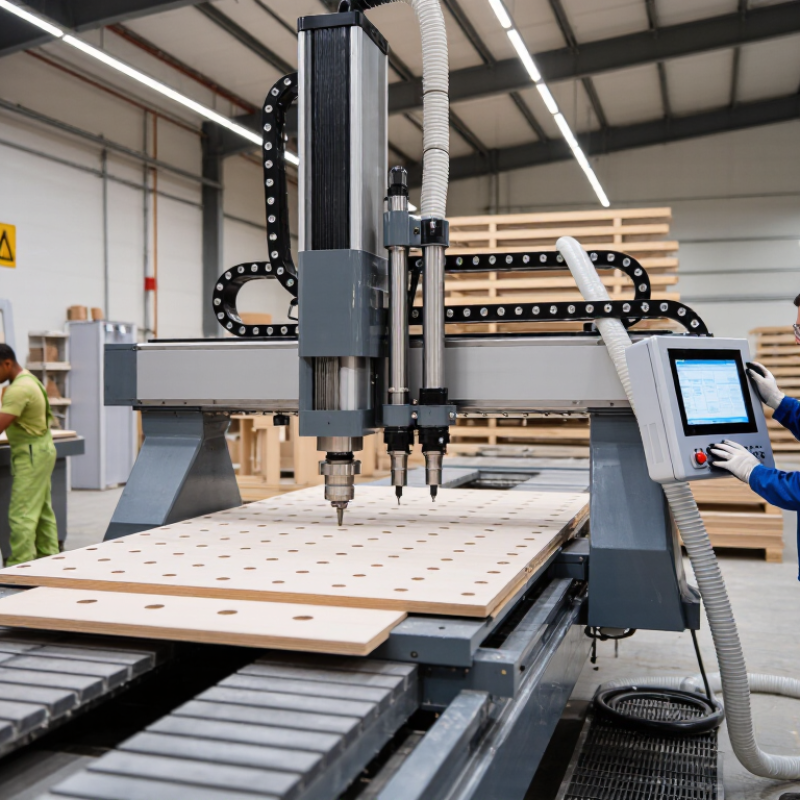
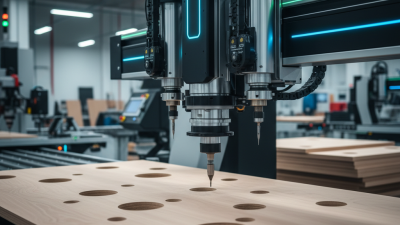
Panel drilling machines create accurate holes in flat boards used for furniture, cabinetry, partitions, and interior fittings. Unlike handheld tools, they control position, depth, and drilling sequence with greater consistency. A typical machine uses a worktable, positioning system, drill spindle, clamps, and a computer-controlled interface. The panel rests on supports or a vacuum table.

Here is how the process works. The operator loads a digital drilling plan or enters hole coordinates manually. Sensors check the panel’s position before drilling begins. The machine moves the spindle along programmed axes, then lowers the selected bit at a controlled speed. Pneumatic or mechanical clamps reduce movement. Dust extraction removes chips around the hole, although fine dust can still collect near the spindle.

Accuracy depends on more than software. Bit sharpness, panel thickness, surface flatness, and feed settings all matter. In practical evaluations, a slightly warped board can create noticeable alignment errors. That detail is easy to miss. Operators should test several panels, measure hole spacing, and inspect the first completed batch. Buyers should also verify power compatibility, maintenance access, operator training, spare-part availability, and local safety requirements. A fast machine is not automatically the best choice. It may need more skilled setup and stricter cleaning routines.
Key Features to Compare in Modern Panel Drilling Machines

2026 Top Panel Drilling Machines for Global Buyers?

Modern panel drilling machines should be compared by process control, not brochure speed. Check drilling accuracy across repeated cabinet panels, especially after several hours of operation. A stable boring head, rigid frame, and automatic tool measurement reduce visible misalignment. Spindle speed matters, but torque at low speed can matter more for dense boards.

Software is now a practical dividing line. Look for nesting compatibility, barcode reading, simple job editing, and clear error messages. The International Federation of Robotics reported 541,302 industrial robots were installed worldwide in 2023, a 10% annual increase. This signals stronger automation demand, but automation is not automatically productivity. Poor data preparation can create expensive mistakes faster.

Dust control deserves direct testing. Ask whether extraction keeps drill holes clean around the panel surface and whether filters remain accessible. Compare tool-change time, compressed-air use, noise, and daily maintenance hours. Energy monitoring is useful because idle consumption is easy to ignore. Safety features should include guarded access, emergency stops, and restart protection. Training quality also matters. A technically advanced machine can still underperform with unclear software or weak service support. Buyers should request sample-panel trials, maintenance records, and accuracy results from comparable materials. Some specifications look impressive on paper. Real production can be less polite.

Top Panel Drilling Machine Types for Different Production Needs

For global buyers in 2026, panel drilling machine selection should match the production pattern, not only the advertised speed. Single-spindle machines suit workshops producing varied furniture panels and occasional custom orders. They offer flexible positioning and simpler maintenance. Multi-spindle machines work better for repeated cabinet parts, where several holes must be drilled in one cycle. Their fixed layout can reduce setup time, but it may limit design changes.

CNC panel drilling machines support complex patterns, nesting work, and frequent product changes. They are useful for medium and large factories needing consistent hole spacing across many panels. Vertical models save floor space, while horizontal models handle edge drilling and dowel preparation more effectively. Automatic loading systems can improve output in continuous production, although they require careful calibration. In practical workshops, dust extraction, tool access, and software compatibility often matter as much as drilling speed. A faster machine is not always the better investment.

Tips: Match the machine’s spindle count to daily panel volume. Check drilling depth, panel thickness, positioning accuracy, and compatible bit sizes. Request a test using your own board material, especially if you process melamine, plywood, or dense fiberboard. Inspect the control interface and maintenance points before purchase. I have seen buyers focus on cycle time, then discover that setup changes consume most of the shift. Leave room for operator training and future production changes.

How to Evaluate Suppliers and Global Purchasing Options

For 2026 panel drilling machines, supplier evaluation should begin with production evidence, not catalog promises. A useful supplier should provide test videos, tolerance records, service contacts, and references from comparable factories. Ask for spindle speed, drilling accuracy, tool-change time, dust extraction requirements, and compatible control systems. One impressive sample is not enough.

The International Federation of Robotics reported 541,302 industrial robots installed worldwide in 2023. This indicates continuing investment in automated production, but automation quality varies sharply by region. Check whether the supplier supports remote diagnostics, spare-parts planning, and operator training. Request a factory acceptance test using your own panel materials. Measure hole position, edge quality, cycle time, and noise. Small details matter.

Global purchasing also depends on logistics and after-sales capability. The World Bank’s 2023 Logistics Performance Index highlights customs, infrastructure, shipment tracking, and delivery reliability as major supply-chain factors. Compare total landed cost, not only machine price. Include packaging, insurance, installation, taxes, local compliance checks, and technician travel. Confirm electrical standards and safety documentation before signing. ISO 230-2 testing can help verify positioning accuracy, while ISO 13849 principles support safer control systems. I would still leave contingency time for commissioning. Supplier promises can be optimistic. A lower-cost machine may become expensive when software support is unclear or critical parts require long-distance shipping.

2026 Top Panel Drilling Machines for Global Buyers? - How to Evaluate Suppliers and Global Purchasing Options

Evaluation Dimension Entry-Level CNC Panel Drill 3-Axis CNC Drilling Centre Multi-Spindle Panel Drilling Line High-Flexibility 5-Axis System
Typical application Cabinet components, shelves, hinges and dowel holes Furniture panels, modular cabinetry and repeated batch production High-volume panel processing with automated loading and unloading Complex parts, angled drilling, nesting and mixed product batches
Typical working area Approx. 1,220 × 2,440 mm Approx. 1,300 × 2,500 mm Approx. 1,300 × 2,800 mm or configurable Approx. 1,300 × 2,500 mm; configuration-dependent
Common panel thickness 10–50 mm 10–60 mm 10–60 mm 10–80 mm, depending on tooling
Drilling diameter range Typically 3–35 mm Typically 3–40 mm Typically 3–35 mm per spindle Typically 3–50 mm, tooling-dependent
Spindle configuration Single vertical spindle or compact drilling head Vertical spindle with optional horizontal drilling Multiple vertical and horizontal spindles Multi-axis spindle with automatic tool management
Typical spindle speed 3,000–6,000 rpm 4,000–8,000 rpm 3,000–6,000 rpm 6,000–18,000 rpm
Installed electrical load Approximately 5–12 kW Approximately 8–18 kW Approximately 15–35 kW Approximately 18–45 kW
Positioning accuracy target About ±0.10–0.20 mm About ±0.05–0.15 mm About ±0.05–0.15 mm About ±0.03–0.10 mm
Control and file compatibility Basic CNC interface; confirm DXF or manufacturer-specific formats CNC controller with common CAD/CAM import options Production-line software, barcode or network integration Advanced CAD/CAM, nesting and tool-path simulation
Automation level Manual loading and unloading Optional automatic positioning and panel handling Automatic loading, unloading, labeling and material transfer Automatic tool change and programmable workholding
Best purchasing fit Small workshops and budget-sensitive buyers General-purpose manufacturers requiring repeatable output Large factories prioritising throughput and labour reduction Manufacturers handling varied designs and complex operations

Global Supplier and Purchasing Evaluation Checklist

Purchasing Dimension What to Request from the Supplier Recommended Acceptance Point Global Buyer Consideration
Technical specification Detailed drawings, working envelope, spindle layout, power rating and cycle-time assumptions All specifications are measurable and match the intended panel size and material Check metric or imperial dimensions and local power requirements before ordering
Sample testing A test report using the buyer's panel, hole pattern, tooling and production file Hole position, edge distance, surface quality and cycle time are recorded Use identical material thickness and tooling conditions for fair comparison
Quality documentation Inspection records, electrical diagrams, pneumatic diagrams, manuals and spare-parts list Documents are complete, current and supplied in an agreed language Confirm translation, document format and retention requirements for local audits
Safety and conformity Risk assessment, guarding details, emergency-stop design and applicable conformity declaration Machine complies with the destination market's machinery and electrical safety rules Requirements vary by destination; verify local import and workplace-safety obligations
Electrical compatibility Rated voltage, frequency, phase, full-load current and recommended protection Electrical configuration matches the installation site's available supply Common industrial supplies include 380–415 V, three-phase, 50 Hz; verify locally
Lead time and production slot Written manufacturing schedule, factory acceptance date and shipping-ready date Milestones are contractually defined with remedies for material delay Allow additional time for port congestion, customs clearance and inland delivery
Inspection and acceptance Factory acceptance test, video evidence, dimensional checks and packing inspection Payment balance is linked to documented acceptance criteria Use an independent inspection service when remote acceptance is insufficient
Incoterms and logistics Quotation under a stated Incoterms® 2020 rule, packing dimensions and gross weight Responsibilities, insurance, export documents and delivery point are unambiguous Compare EXW, FOB, CFR and DAP only after adding local freight, duties and taxes
Installation and training Installation scope, commissioning checklist, operator training and remote-support hours The machine is not considered fully accepted until commissioning is completed Confirm visa, travel, language and site-preparation responsibilities in advance
Warranty and service Warranty duration, response time, excluded parts and escalation procedure Service-level commitments are written into the purchase contract Prioritise suppliers that can provide remote diagnostics and regional technical support
Spare-parts availability Recommended two-year spare-parts list, prices, part numbers and delivery times Critical consumables and electrical components have identifiable replacements Budget for tooling, sensors, belts, filters and commonly replaced wear parts
Total cost of ownership Machine price, tooling, freight, installation, energy use, software and maintenance costs Compare five-year ownership cost rather than purchase price alone Include exchange-rate exposure, import charges, downtime and operator training
Data note: The technical figures are indicative market ranges for panel drilling machine categories. Final values depend on machine configuration, tooling, material, software, electrical supply and the supplier's documented test conditions.

Installation, Operation, Maintenance, and Safety Requirements

Installation, Operation, Maintenance, and Safety Requirements for Panel Drilling Machines

A panel drilling machine needs a level foundation, stable anchoring, and enough clearance for material handling. Installation teams should verify electrical voltage, protective earthing, compressed-air quality, dust extraction, and emergency-stop access before commissioning. ISO 12100 recommends a documented risk assessment covering crushing, entanglement, ejected chips, noise, and unexpected start-up. Field commissioning often reveals a simple weakness: poor alignment. It creates vibration, inaccurate holes, and premature tool wear.

During operation, guards and interlocks must remain functional, while operators should secure panels before drilling. Eye protection, hearing protection, suitable footwear, and controlled housekeeping reduce exposure to chips and dust. OSHA machine-guarding requirements, including 29 CFR 1910.212, provide a useful benchmark, although buyers must follow local regulations. The U.S. Bureau of Labor Statistics recorded 5,283 fatal occupational injuries in 2023, with a rate of 3.5 per 100,000 full-time workers. The figure is not machine-specific, but it shows why convenience cannot replace control measures.

Maintenance should include daily cleaning, weekly inspection of clamps and guards, and scheduled checks of spindle runout, belts, lubrication, sensors, and electrical connections. Lockout/tagout or an equivalent isolation procedure is essential before service work. ISO 45001 supports systematic occupational-safety management. Still, maintenance schedules are not perfect. Dust levels, duty cycles, humidity, and operator habits can change them. Buyers should record faults, near misses, and repeated adjustments, then revise procedures with competent technicians.

WhatsApp Online Chat !