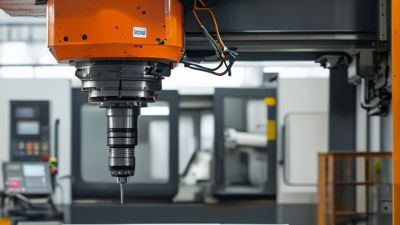
Choosing among 3-Axis Machines is rarely about spindle speed alone. It is about repeatability, service access, tooling, software, and total ownership cost.
Grand View Research estimated the global CNC machine market at approximately USD 83.7 billion in 2023. Its report also projects strong growth through 2030. However, this figure covers several machine categories, not only three-axis models. Buyers should avoid treating broad market data as a direct product ranking.
The International Federation of Robotics reported more than 500,000 industrial robots installed worldwide in 2023. This signals stronger automation demand, but many workshops still depend on practical three-axis machining. A reliable machine can produce aluminum brackets, steel fixtures, mold components, and small-batch parts without excessive complexity.
Manufacturing scholar Dr. David B. Dornfeld has said, “Manufacturing is the backbone of any economy.” His observation remains useful here. Machine selection affects production stability, worker training, energy use, and delivery promises.
This guide reviews ten 3-Axis Machines for global buyers. It considers working envelope, control systems, accuracy, maintenance support, and regional service networks. Price matters. Downtime matters more.
Some rankings remain debatable. A premium machine may not suit a small workshop with limited power capacity. A lower-cost model may perform well, but only with careful installation and maintenance.
That is the uncomfortable part. No single machine wins every application. The right choice depends on material, batch size, operator skill, and local support.
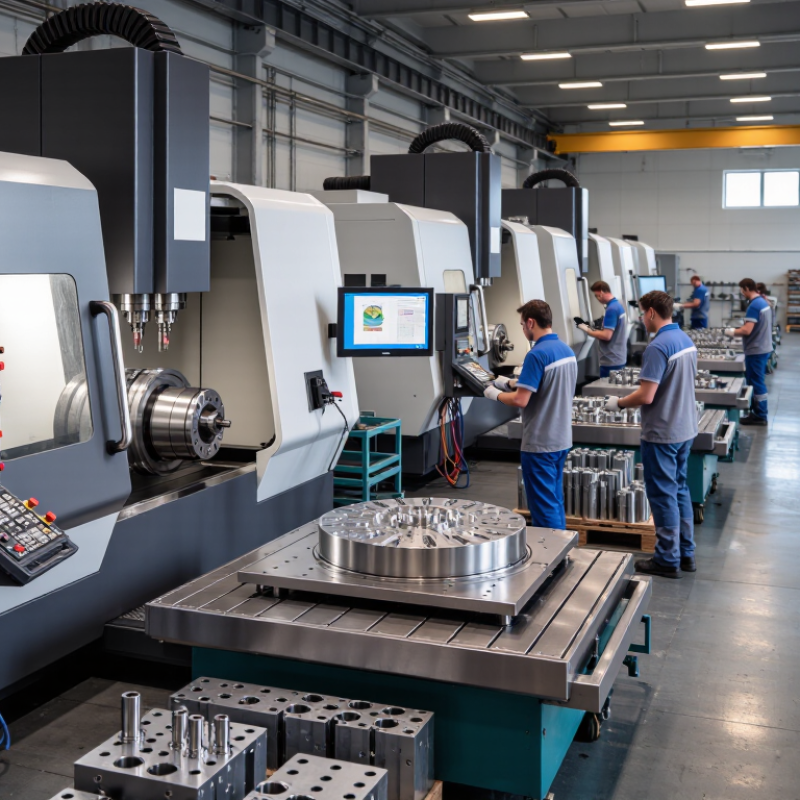
A 3-axis CNC mill moves along X, Y, and Z without rotary motion. X usually covers left-to-right table movement. Y controls front-to-back travel. Z moves the spindle vertically. Travel matters.
Buyers should compare usable travel, not only catalog numbers. A mill with 800 mm X travel may lose space to fixtures, tooling, and safety margins. Check table size, spindle nose clearance, maximum workpiece height, and payload. A steel block measuring 600 mm can still be unsuitable if the fixture consumes 120 mm. Measure twice.
ISO 10791 is a test framework for machining centres, not a simple quality badge. The applicable sections may examine geometric accuracy, positioning performance, repeatability, spindle behavior, or cutting performance. The exact scope depends on the machine type and selected test method. Request the test date, environmental temperature, measuring instruments, compensation settings, and acceptance limits. Results should identify the tested axis travel clearly.
In my experience, suppliers sometimes present a compliant-looking report with limited details. That is not always dishonest, but it demands questions. Ask whether testing occurred after machine warm-up and whether the report covers the full X-Y-Z range. A short travel test can hide errors near the axis ends. Global buyers should also confirm metric or imperial specifications, voltage requirements, documentation language, installation conditions, and after-sales measurement support. AXIS labels can vary. The drawing remains the safer reference.
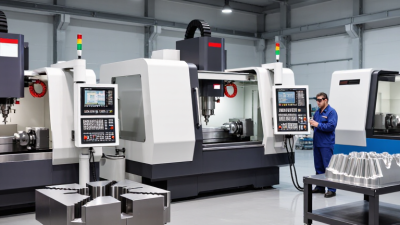
For global buyers comparing 3-axis machines, repeatability and spindle speed deserve more attention than brochure horsepower. A practical benchmark is ±0.01 mm repeatability, verified through controlled testing rather than marketing claims. ISO 230-2 procedures can help buyers compare positioning performance, but workshop temperature, tooling, lubrication, and operator habits still affect results.
Speed matters differently across materials. An 8,000–12,000 rpm spindle suits many steels and general production work. Aluminum, plastics, and fine-detail components may benefit from 18,000–24,000 rpm, especially with balanced tools and suitable feeds. Faster is not automatically better. Heat, vibration, and tool runout can quickly erase theoretical gains. I have seen clean test cuts become less stable after several production hours.
The International Federation of Robotics reported 4.28 million industrial robots operating worldwide in 2023, showing how strongly factories are adopting automated production. Deloitte’s 2024 Smart Manufacturing survey also found that 86% of surveyed manufacturers view smart manufacturing as important to competitiveness. A 3-axis machine should therefore support repeatable setup data, probing, remote monitoring, and consistent maintenance records.
Ask for a measured test piece. Check bore size, pocket corners, surface finish, and repeat runs. Request results at both low and high spindle speeds. One weakness remains: published accuracy data often reflects ideal conditions, not a busy shop floor. That gap deserves careful questioning.
Benchmark comparison based on repeatability targets of ±0.01 mm or better and spindle speeds from 8,000 to 24,000 rpm.
How to read this chart: Lower repeatability values indicate tighter positioning consistency, while higher spindle speeds support efficient cutting of aluminum, plastics, and other light-to-medium materials. The figures represent realistic engineering benchmark points for generic 3-axis machine configurations and do not identify any manufacturer.
10 Best 3-Axis Machines for Global Buyers?
Comparing ten leading 3-axis machines requires more than checking the price tag. Their work envelopes range from compact 300 × 200 mm platforms to production tables above 1,000 × 500 mm. Spindle power commonly spans 5.5 to 30 kW. That difference affects tool diameter, cutting depth, and material removal rate. Grand View Research estimates the global CNC machine market reached about USD 83.9 billion in 2023, showing strong demand for scalable equipment. Still, market growth does not guarantee a suitable machine.
Controls deserve equal attention. Basic systems may handle standard G-code reliably, while advanced controls add probing, simulation, remote monitoring, and network connectivity. The International Federation of Robotics reported 541,302 industrial robots installed worldwide in 2023. That figure reflects a wider move toward connected production, even for smaller workshops.
Buyers should check file compatibility, training requirements, service access, and spare-part availability. Fancy controls can become expensive decoration.
Costs vary sharply. Compact machines may begin near USD 25,000, while rigid, high-power systems can exceed USD 250,000 before tooling and installation. These figures are practical estimates, not universal quotations. A lower purchase price may hide weak coolant systems, limited memory, or slow tool changes. I would score each of the ten machines across envelope, spindle power, control capability, and total ownership cost. My scoring would not be perfect. Local labor rates, electricity, import duties, and operator skill can change the result.Japgolly
Choosing among the 10 best 3-axis machines depends less on popularity and more on production evidence. Match the work envelope to your largest part, leaving room for fixtures and tool movement. Aluminum usually rewards high spindle speed and efficient chip evacuation. Steel needs stiffness, stable cutting, and reliable coolant delivery. Steel needs stiffness. Plastics need restraint. Excessive heat can melt edges or distort thin walls.
Tolerance claims require careful interpretation. A machine may advertise impressive positioning accuracy, yet real results depend on temperature, tooling, fixturing, programming, and operator practice. For tight holes, include probing or an independent inspection process. For general brackets, a rigid machine with repeatable setup may outperform a more precise model used poorly. I have seen buyers blame the machine when worn tools caused most deviations. That shortcut fails.
Batch volume also changes the right choice. Low-volume work benefits from quick setup, accessible fixtures, and flexible programming. Repeated production may justify a larger table, automatic tool changing, chip management, and easier loading. Plastics and aluminum often support faster cycles, while tough alloys can demand slower feeds and more frequent tool checks. A simple capacity chart helps, but it can mislead when part geometry changes. Compare sample cuts, measured tolerances, cycle times, and service response before purchasing. Leave room for honest uncertainty.
| Rank | Machine Profile | Typical XYZ Travel (mm) |
Spindle Range (rpm) |
Typical Motor Power (kW) |
Workpiece Capacity (kg) |
Recommended Materials | Typical Positioning Accuracy (mm) |
Repeatability (mm) |
Best Batch Volume | Best Use Case |
|---|---|---|---|---|---|---|---|---|---|---|
| 1 | Compact Benchtop CNC Mill | 300 × 200 × 250 | 6,000–12,000 | 1.5–3.7 | 50–150 | Aluminum, brass, engineering plastics, wood | ±0.015–0.030 | ±0.008–0.015 | Prototype to 50 parts/month | Education, product development, small precision parts |
| 2 | Compact Vertical Machining Center | 500 × 400 × 450 | 8,000–15,000 | 5.5–11 | 250–500 | Aluminum, steel, stainless steel, plastics | ±0.010–0.020 | ±0.005–0.010 | 50–500 parts/month | General-purpose job-shop production |
| 3 | High-Speed Aluminum Mill | 600 × 450 × 450 | 12,000–24,000 | 7.5–15 | 300–600 | Aluminum alloys, magnesium alloys, brass, plastics | ±0.008–0.015 | ±0.004–0.008 | 100–2,000 parts/month | Fast material removal, thin walls, molded-part tooling |
| 4 | Heavy-Duty Steel Machining Center | 800 × 500 × 600 | 6,000–10,000 | 11–22 | 800–1,500 | Carbon steel, stainless steel, cast iron, titanium | ±0.010–0.020 | ±0.005–0.010 | 20–500 parts/month | Deep cuts, high-force machining, industrial components |
| 5 | Precision Mold and Die Mill | 700 × 500 × 500 | 12,000–30,000 | 7.5–18.5 | 500–1,000 | Tool steel, hardened steel, graphite, aluminum, plastics | ±0.005–0.010 | ±0.002–0.005 | 1–100 molds or dies/year | Cavity machining, electrodes, precision tooling |
| 6 | Large-Format Vertical Machining Center | 1,200 × 600 × 600 | 6,000–12,000 | 15–30 | 1,000–2,500 | Steel, aluminum, cast iron, stainless steel | ±0.012–0.025 | ±0.006–0.012 | 10–200 large parts/month | Large plates, housings, machine bases, structural parts |
| 7 | High-Production Vertical Mill with Automatic Tool Changer | 800 × 500 × 500 | 8,000–15,000 | 11–22 | 500–1,200 | Aluminum, steel, brass, engineering plastics | ±0.008–0.015 | ±0.004–0.008 | 500–10,000 parts/month | Repeat production with reduced setup and tool-change time |
| 8 | Polymer and Composite Routing Center | 1,500 × 800 × 200 | 12,000–24,000 | 3.7–11 | 200–800 | ABS, acrylic, nylon, PVC, wood, carbon-fiber panels | ±0.020–0.050 | ±0.010–0.025 | 50–5,000 panels or components/month | Large plastic sheets, signs, fixtures, composite trimming |
| 9 | High-Precision Micro Machining Center | 300 × 300 × 300 | 20,000–60,000 | 3.7–11 | 50–250 | Aluminum, brass, stainless steel, graphite, technical plastics | ±0.003–0.008 | ±0.001–0.004 | 10–1,000 small parts/month | Miniature components, optical parts, medical and electronic hardware |
| 10 | Entry-Level Production VMC | 600 × 400 × 450 | 6,000–10,000 | 5.5–11 | 250–600 | Aluminum, mild steel, brass, plastics | ±0.015–0.030 | ±0.008–0.015 | 50–1,000 parts/month | Budget-conscious workshops and general contract machining |
Note: Specifications are representative ranges for commercially available 3-axis machine categories. Actual performance depends on machine construction, control system, tooling, workholding, thermal conditions, material grade, cutting parameters, calibration, and operator setup.
Buying a 3-axis machine globally requires more than comparing spindle speed and table size. CE marking indicates conformity with applicable European requirements, but it is not a universal quality certificate. Ask for the Declaration of Conformity, risk assessment, electrical drawings, and test records. For North American projects, verify relevant UL and local electrical requirements separately. One certificate may not cover every configuration.
Voltage deserves early attention. A 400 V, 50 Hz machine may need a transformer in a 480 V, 60 Hz facility. That adds cost, heat, floor space, and another failure point. IEC 60204-1 provides a useful reference for machine electrical safety. Confirm phase, frequency, breaker capacity, grounding, and plug design before ordering. Small omissions become expensive surprises.
Service capacity often decides total cost. The International Federation of Robotics reported 4.28 million industrial robots operating worldwide in 2023, showing how strongly factories depend on reliable automation support. A buyer should request spare-parts lead times, remote diagnostics, technician coverage, and training hours. Calculate purchase price, freight, installation, energy, tooling, downtime, and resale value. The five-year total cost may outweigh the initial quotation. I have seen buyers focus too heavily on price. That judgment can age badly.ಿಕ್ಷ